


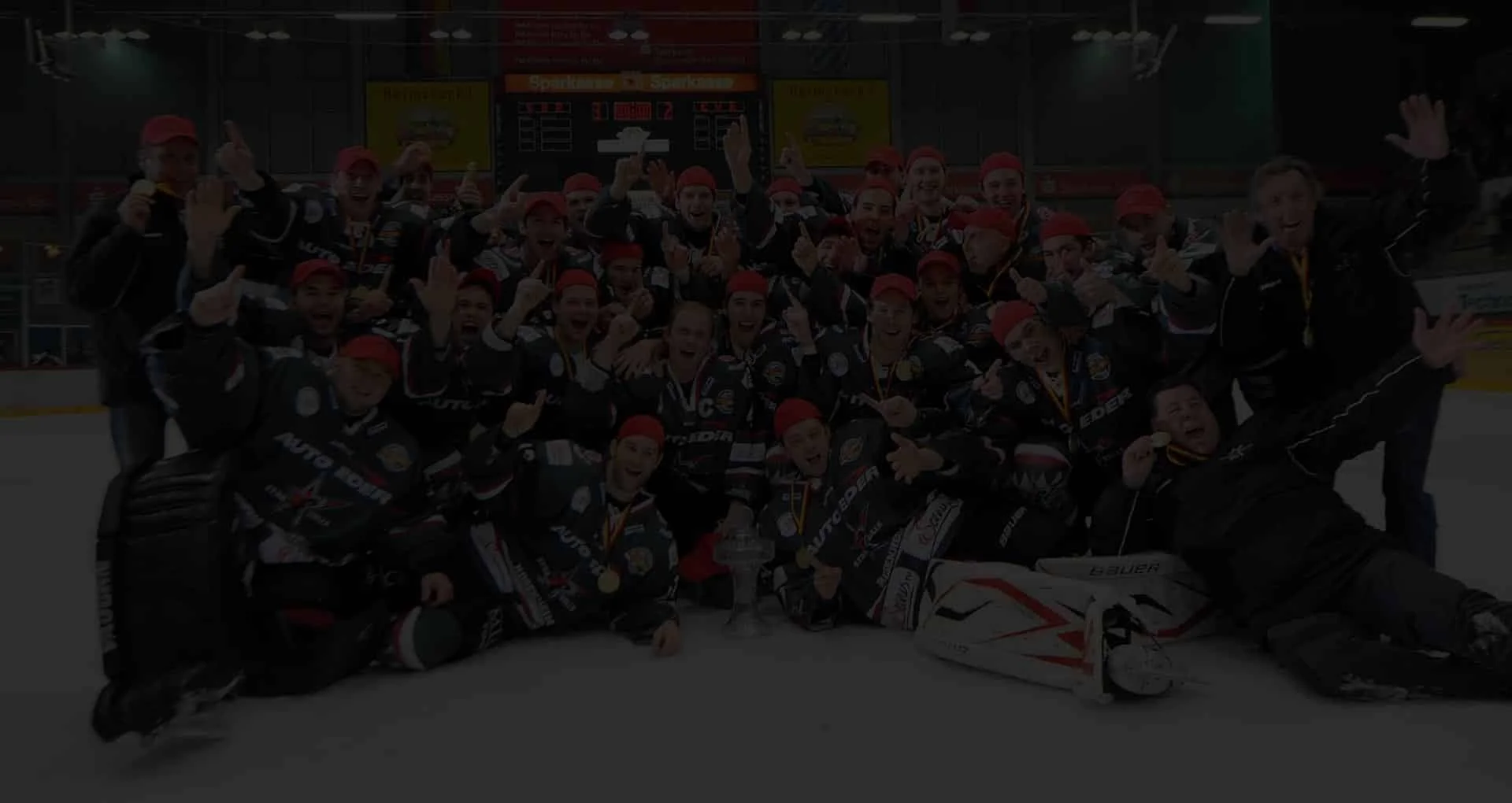
98 Jahre Rosenheim ist Eishockey
Von der Spritzeisbahn an der Wittelsbacher Straße bis ins moderne Stadion. Vom ersten Bully 1928 über drei Deutsche Meistertitel bis in die DEL2 — Rosenheim und Eishockey, das ist eine Liebesgeschichte mit allen Höhen und Tiefen.
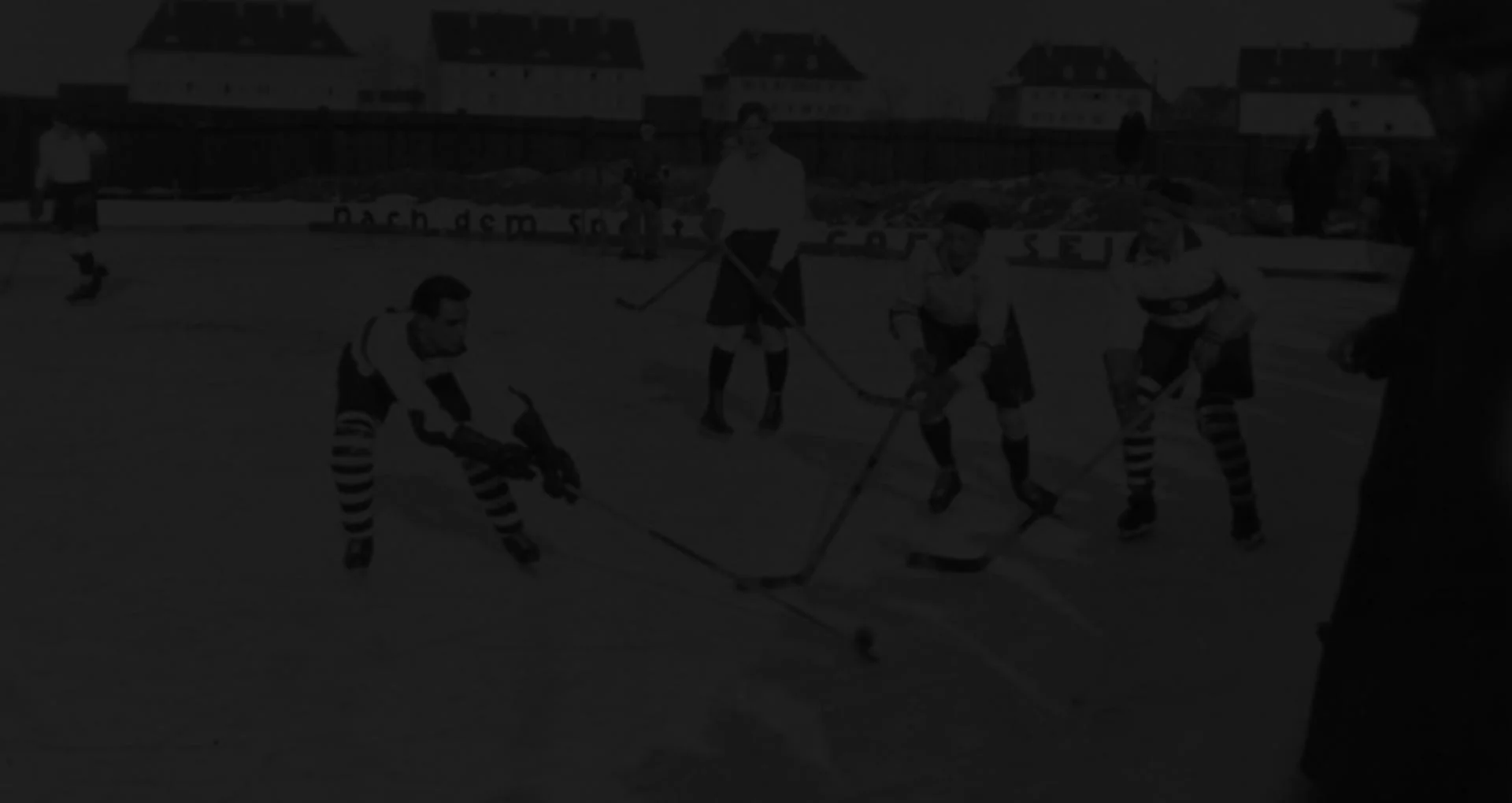
1928 – 1952
From the first faceoff on the artificial ice rink at Wittelsbacher Straße to the natural ice stadium on Jahnstraße — the pioneering years of Rosenheim ice hockey.
1. Friendly match against München II.
On January 1, 1928, Eissportverein Rosenheim played their first friendly match against München II on the artificial ice rink at the tennis courts on Wittelsbacher Straße. The match ended in a 12–0 defeat for Eishockeyverein Rosenheim, as a persistent thaw had left them with only a few days of practice. In the same year, Eishockeyverein Rosenheim played their second friendly match against Bad Tölz.
The first "real" games
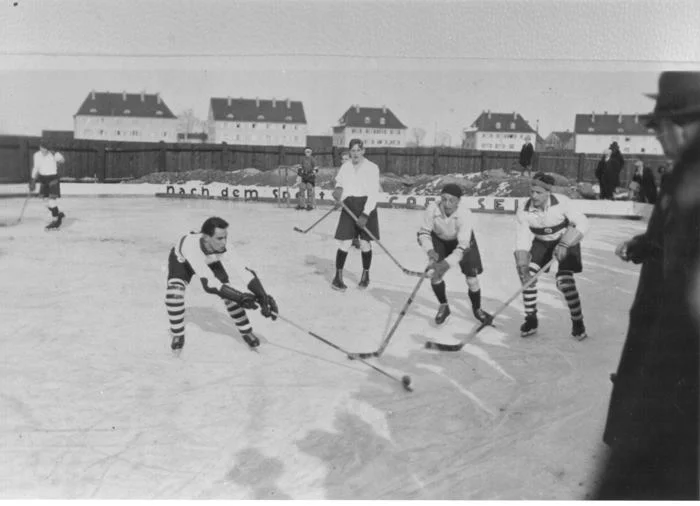
Ab dem 1. Januar 1929 finden in Bad Tölz die ersten „richtigen“ Spiele statt, bei denen der Eissportverein Rosenheim auch sein können beweisen konnte.
Ice Hockey Club Joins Post Sports Club
In 1930, the Eissportverein Rosenheim becomes part of the Postsportverein, a status it holds through 1937.
Postsportverein becomes EV Rosenheim once again
Re-founding of the EVR after the war years
After the war years, the Rosenheim ice hockey club was re-founded, as no ice hockey had been played during that period.
Construction of a natural ice stadium
Not until 1949, and after countless away trips by Rosenheim's "Eishackler" to various venues and lakes, was a natural ice stadium built on Jahnstraße — the result of many hours of voluntary labor.
1952 – 1978
Three promotions to Germany's top division, the construction of the artificial ice stadium, and a return to the Bundesliga in front of 10,000 fans — and ultimately a collapse into insolvency.
First Promotion
In 1952, EVR achieved their first promotion to the highest German league division. Back then, the top flight was known as the Oberliga. However, due to the lack of an artificial ice rink and insufficient youth development, ice hockey in Rosenheim began to decline once again.
Artificial Ice Rink Committee
In 1953, a committee was founded to oversee the construction of an artificial ice rink.
Construction Begins on the Ice Rink
In 1961, pioneers from Degerndorf broke ground on Jahnstraße — without a building permit. Since no one wanted to stop the biggest project in the city, the then-mayor Sepp Heindl sent the EVR chairmen home with the words: "You dirty rascals, now get a move on! Get things rolling!"
Completion of the Ice Rink
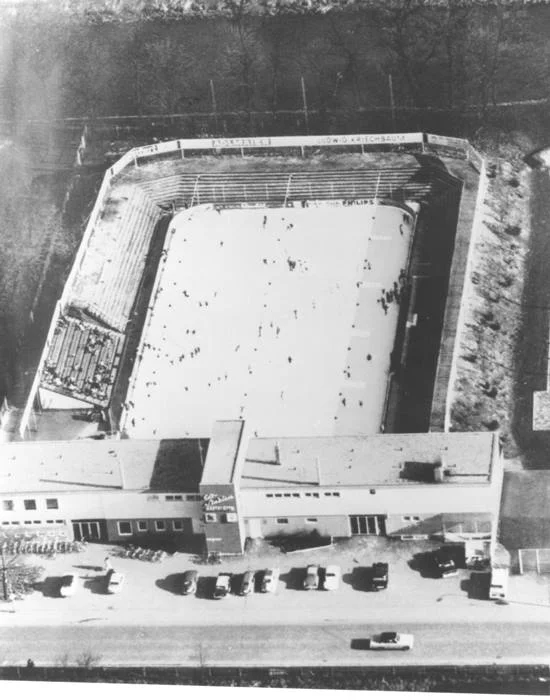
On January 13, 1962, the stadium was officially inaugurated. This created excellent training facilities that soon delivered the desired results.
Second promotion to the top tier of German ice hockey
From the Artificial Ice Rink to the Ice Arena
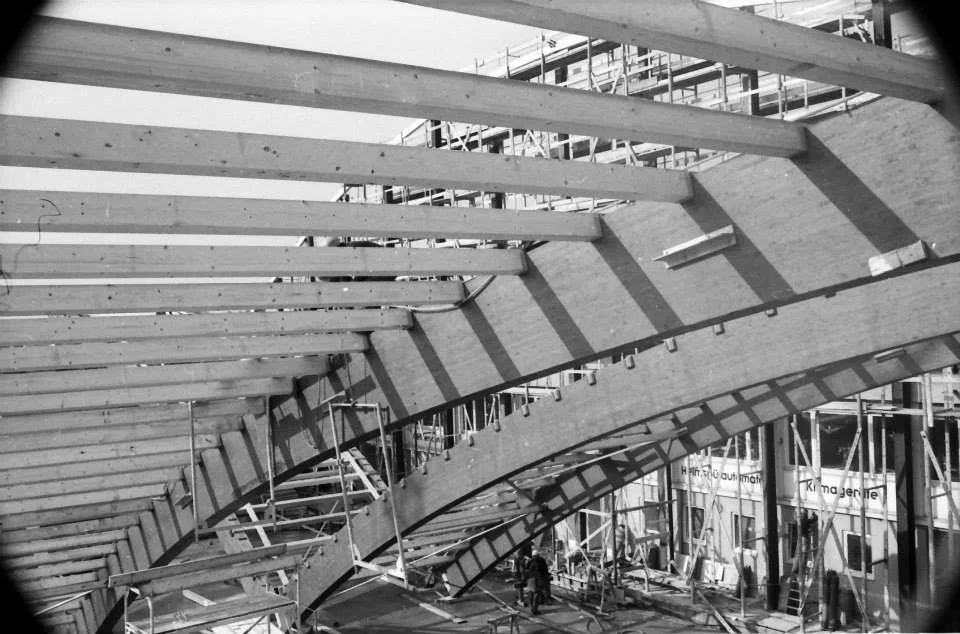
In 1973, the artificial ice rink was taken over and renovated by the city of Rosenheim, including the addition of a roof. This allowed Rosenheim to establish itself as a stronghold of ice hockey. With an 8–1 victory over Duisburger SC, EVR celebrated the opening of the new ice arena, which was handed over by Mayor Dr. Steinbeißer. The roof cost 3.5 million Marks and took six months to build. Since then, twelve massive glulam beams, each 58 metres long, have spanned the Stadion Rosenheim 19 metres above the ice surface.
Third promotion to the highest German league tier
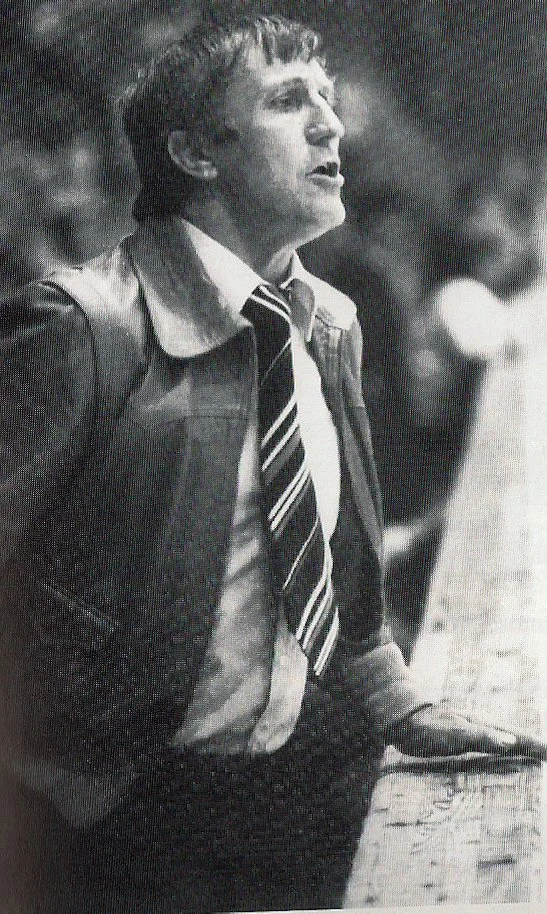
With a 5:2 victory over their biggest rivals at the time, Augsburger EV, in front of an estimated 10,000 fans, the team secured their return to the Bundesliga. The person leading the band behind the boards at that time was Gerhard Kießling (see photo).
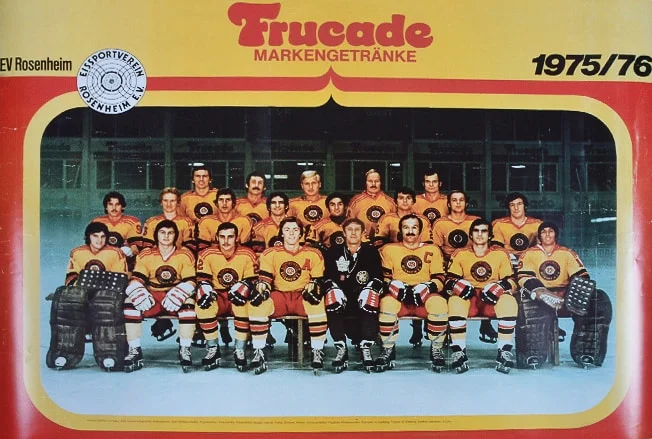
For the third time, a Rosenheim team competes in the top league — and for the second time under the Bundesliga name, following 1958. Unlike the first two stints at the highest level, this one proves to be of longer duration, lasting until the voluntary withdrawal in the 1992/93 season. As EV Rosenheim, however, only through the 1977/78 season — thereafter under Sportbund DJK Rosenheim.
The EV Rosenheim on the brink of extinction
With nearly 1 million Deutschmarks in debt, even the interim chairman and TV chef Max Inzinger — despite support from many sides — could not save EV Rosenheim from bankruptcy.
Insolvency
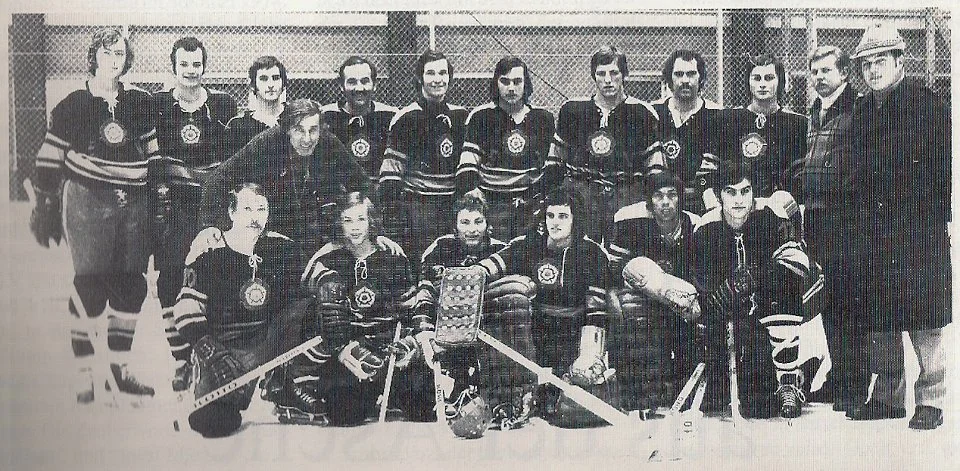
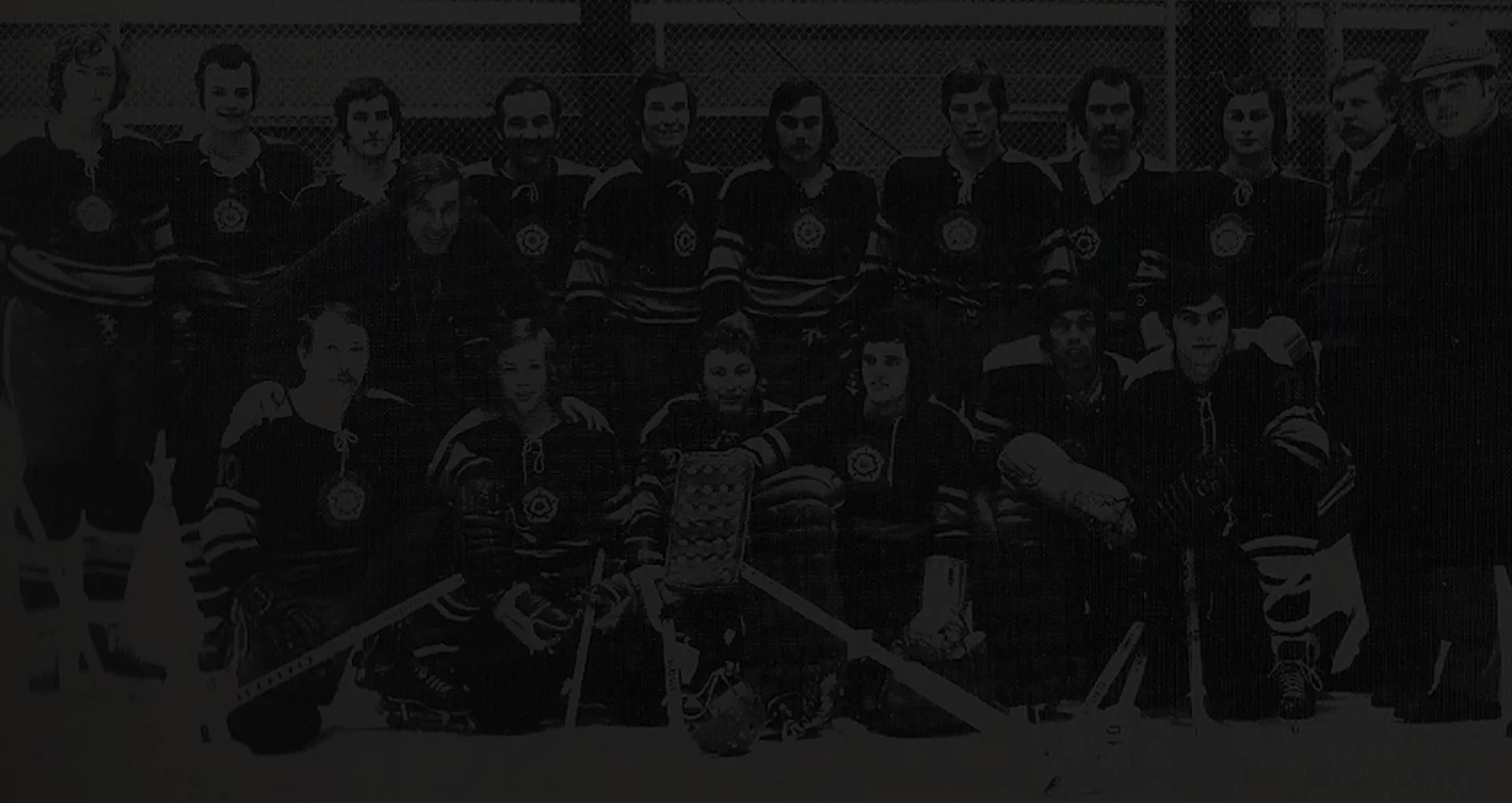
In the summer of 1978, the Rosenheim ice hockey club was forced to file for insolvency. And so the photo shows the last roster of the EVR.
1978 – 1994
After the insolvency, the sports association DJK takes over the ice hockey department — and leads it to three German Championship titles, European Cup appearances, and attendance records. The greatest era in the club's history.
Transfer to Sportbund DJK
After the ultimately inevitable bankruptcy, a loophole in the ice hockey federation's statutes allows Rosenheim's ice hockey club to remain in the Bundesliga. The ice hockey department transfers to the sports association DjK, while the other ice sports form the EVR 1978.
First Season as "Sportbund"
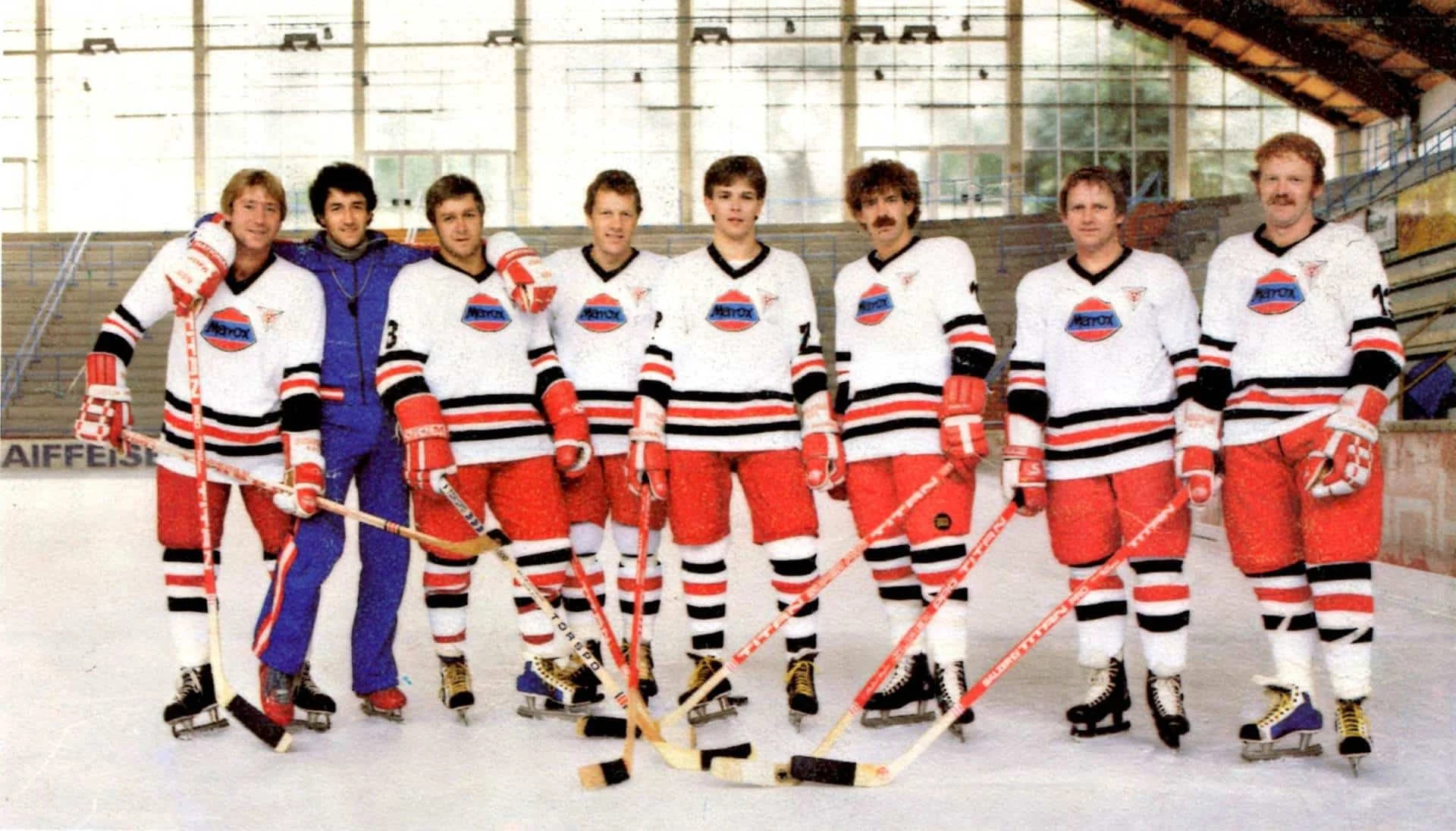
Eleven players remain from EV Rosenheim, while 13 leave the club — among them "Edu" Derkits, who retires, as well as Paul Sommer, Tommi Salmelainen, and Jaroslav Tuma. The format this year: One single round of 22 games, followed by a split into a Championship Round and a Relegation Round. The top six and bottom six teams then face each other six times within their respective groups. EVR narrowly misses out on the Championship Round after points are deducted from both them and Mannheim. Erich Weishaupt transferred from Berliner SC to Mannheim, and Peter Scharf moved to Rosenheim. Deadlines are said to have been missed during these transfers — hence the points deduction. Both players hire star lawyer Rolf Bossi, take the case to a civil court, and win. The points are reinstated to both clubs — yet SBR still misses out on the Championship Round. Instead, the team gets to face — among others — Landshut eight times that season. Despite this "thrilling" format, the Rosenheim stadium still draws an average of 2,450 spectators.
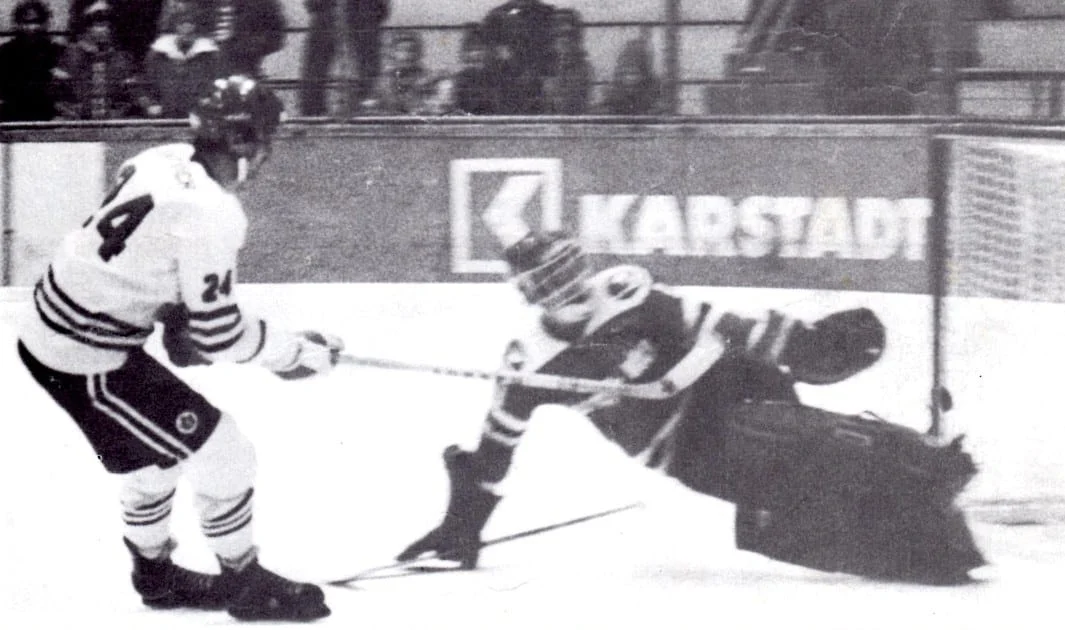
The fan-unfriendly format from the previous year is being changed again. This time, following the American model, the Bundesliga splits into three groups after 22 games in a single preliminary round — sensibly not by region (as in the original model), but by standings. 1st plays 4th, 7th, and 10th — 2nd plays 5th, and so on. The opponents in these groups are, however, both far away and too strong for this Rosenheim squad. New signing Hans Zach also has anything but a good season. Only goalkeeper Makatsch goes from strength to strength, after Karl Huber returns to Landshut mid-season. This leads to a sharp drop in attendance — just 1,050 against Düsseldorfer EG. Average attendance: 2,000
International Recognition of Rosenheim Ice Hockey
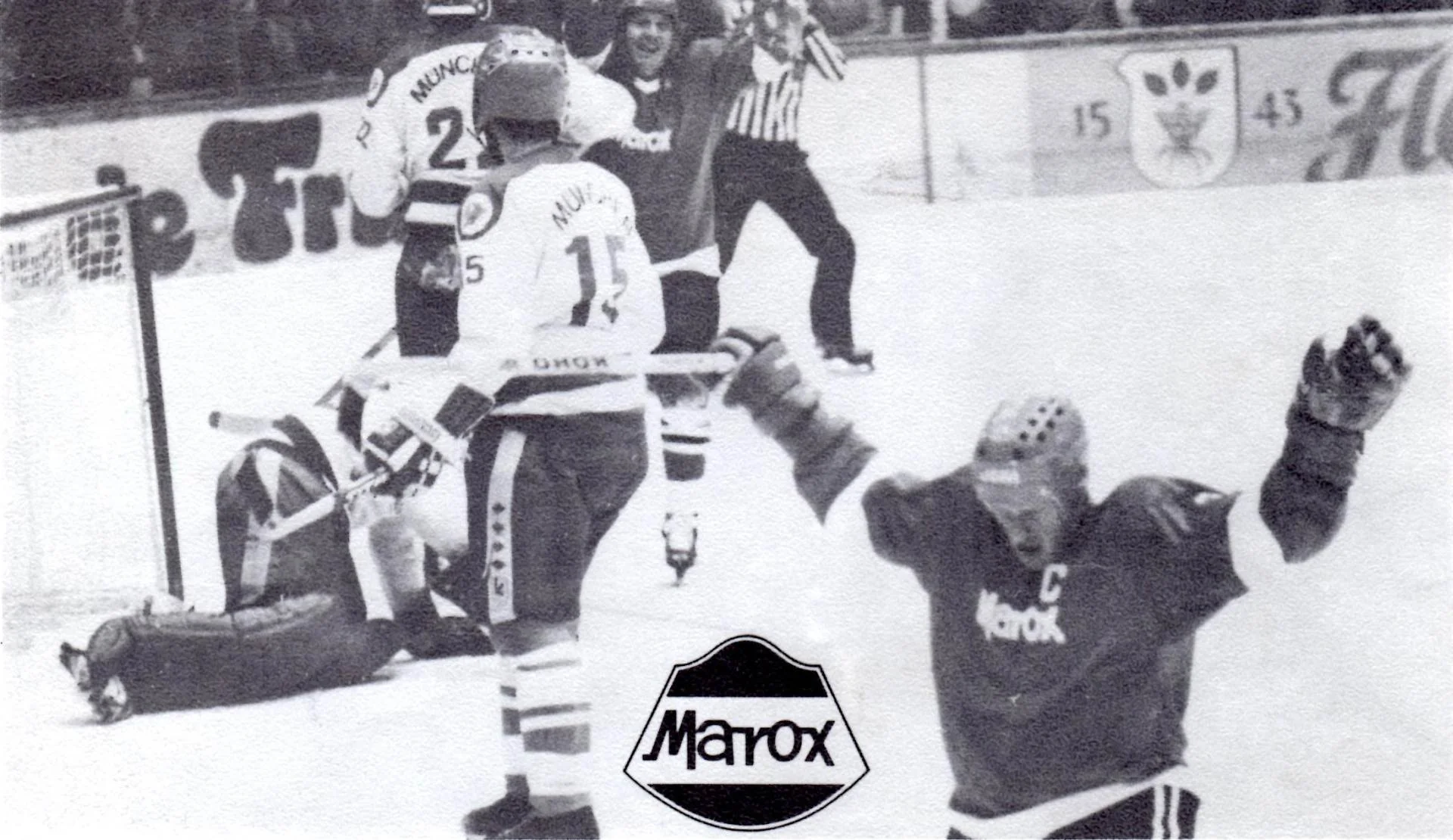
By participating in the European Cup finals, the name of the Sportbund ice hockey division became widely known on the international stage. Thanks to the support of sponsors Josef März and his company Marox, Rosenheim ice hockey proved itself to be world class. Championship titles followed in 1985 and 1989. This brought the prospect of hosting the World Championship in Rosenheim — and the expansion of the stadium — within tangible reach.
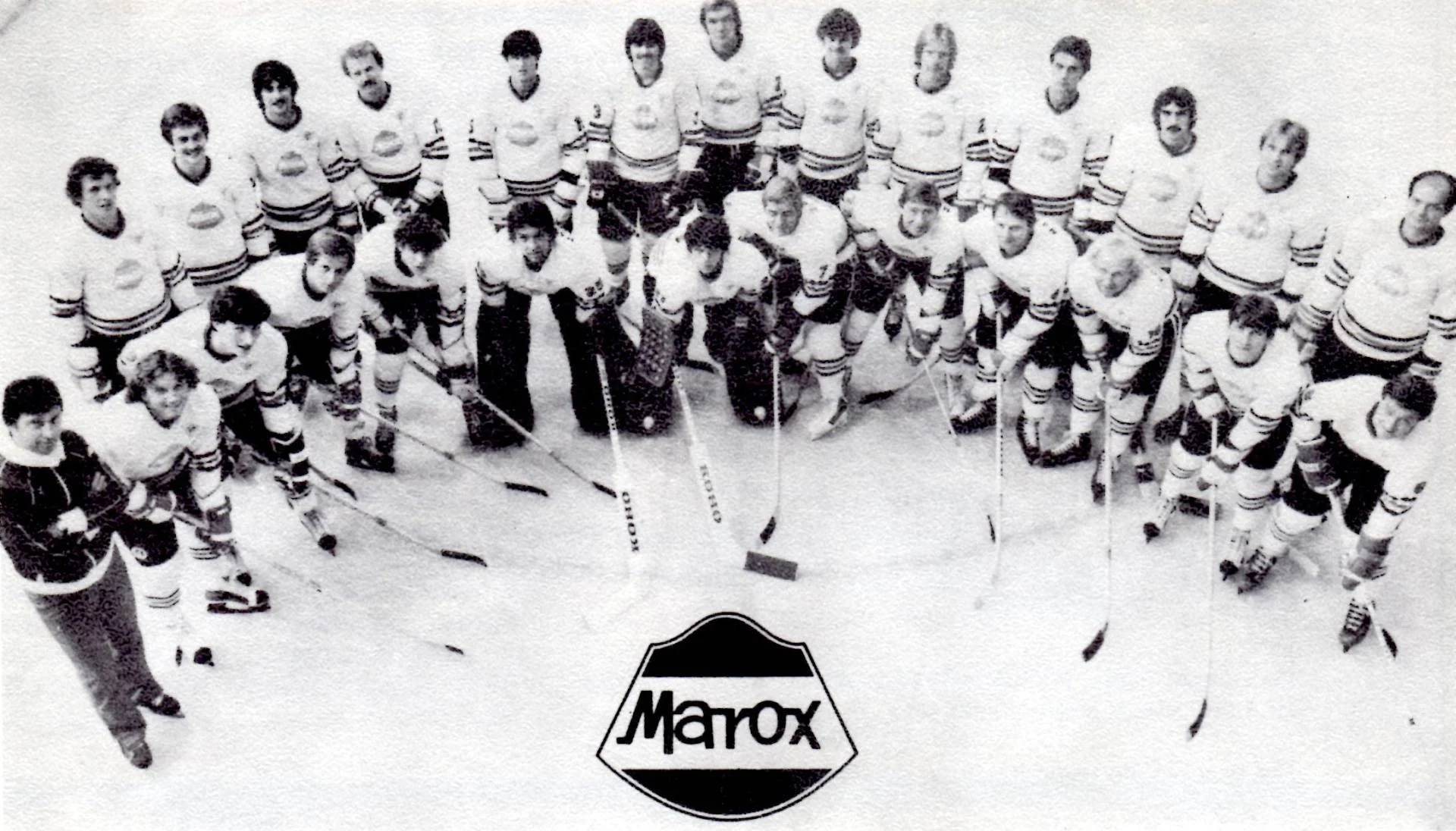
SBR finishes in 7th place. Their first playoff opponent is DEG. They lose narrowly in Düsseldorf, win narrowly at home, and Düsseldorf takes the third game 5–2 — elimination. No — wait. 20 points are now also deducted from Köln for forged player documents, putting Rosenheim in sixth place and setting up a matchup against their original opponent, Mannheim. Even though they are eliminated by MERC, it's been a successful season — and average attendance has doubled to 4,060 compared to the previous year.
1. German Championship Title
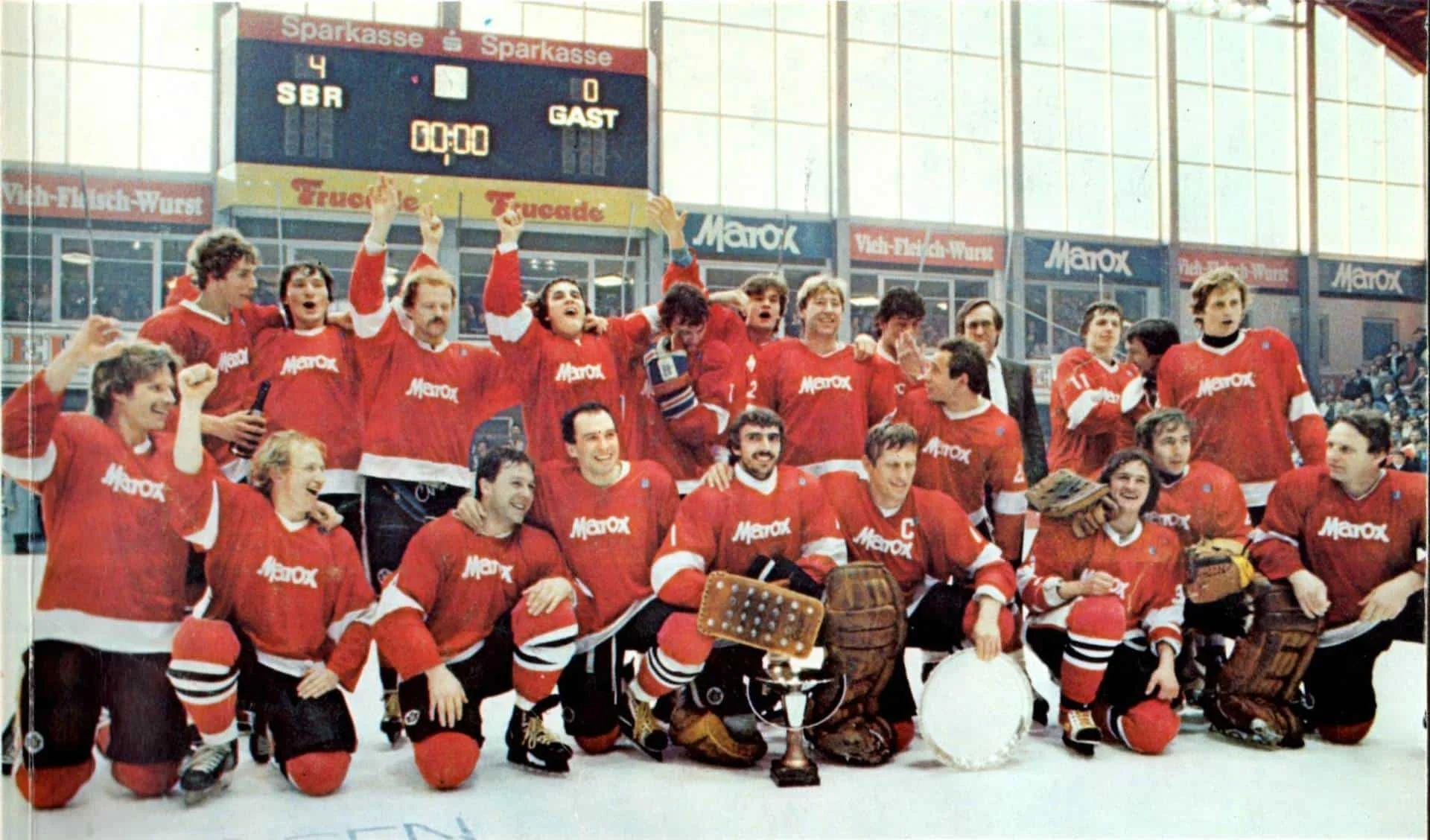
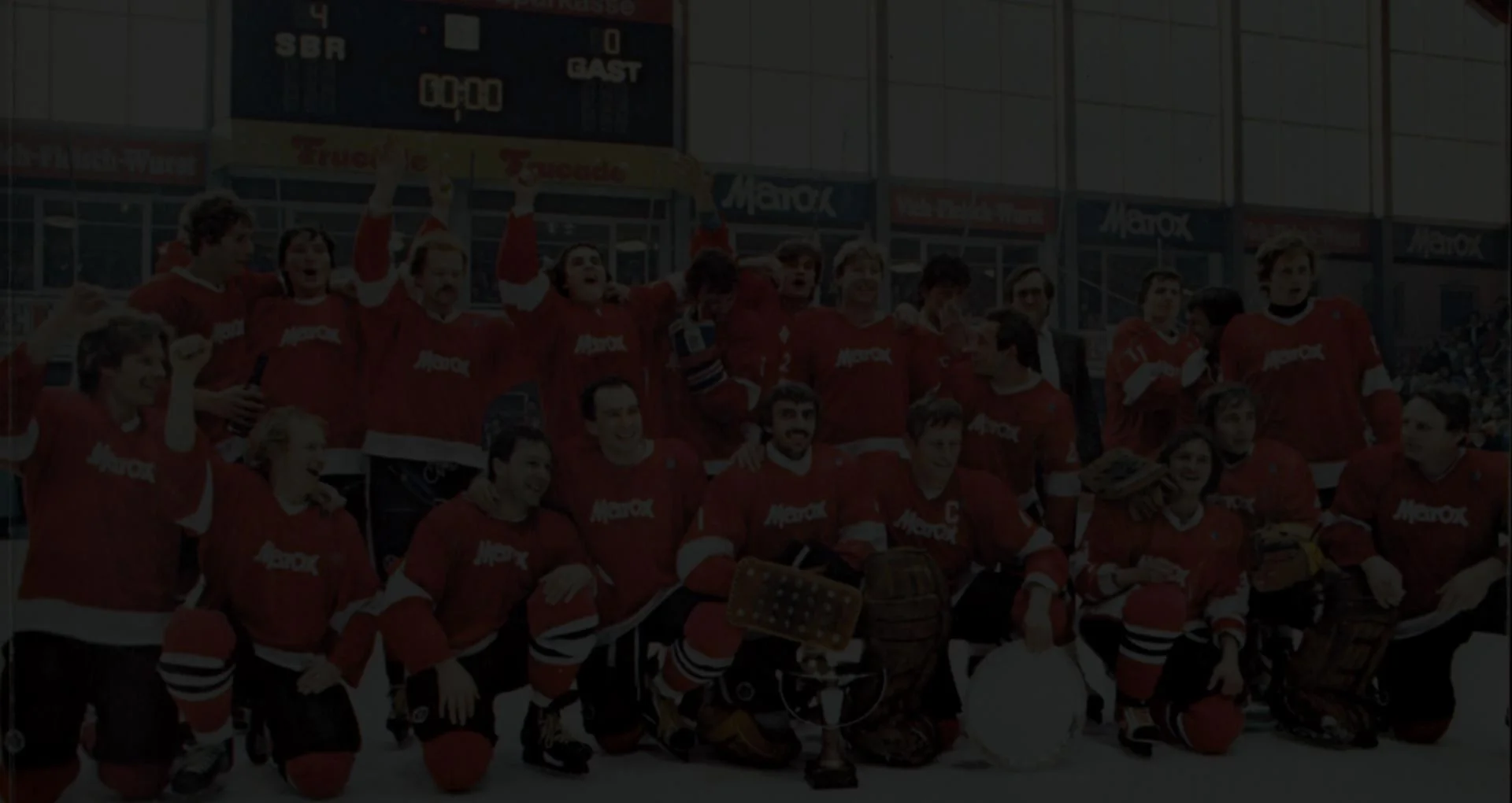
Starbulls Rosenheim's season is a mixed bag, and heading into the playoffs — now featuring "sudden death" for the first time — the team is delivering poor performances and finishes the regular season in 5th place. Title contention is widely considered the domain of the top four finishers only. Up to that point, nobody in Rosenheim is counting on a first championship. In the semifinal, they manage a 5:0 win in Landshut, yet after Landshut's victory in game two in Rosenheim, the odds seem slim at best. Back in Landshut, however, Rosenheim are already up 2:0 after just 11 minutes. After Landshut pulls one back, Jamie Masters puts Rosenheim ahead at 3:1. Landshut manage to level it through goals from Betz and Kühnhackl (52.). In the 59th minute, Gerhard Baldauf scores the decisive goal off an assist from Hans Zach — with goalkeeper Englbrecht bearing some of the responsibility. Mannheim have eliminated Cologne and are the clear favorites heading into the final. But in game one in Mannheim, Rosenheim are already up 2:0 after just 6 minutes through goals from Berwanger and Adlmaier. Mannheim, however, level the score by the 21st minute through goals from Rainer Blum and Adams. Mannheim then take control of the game, but are repeatedly denied by Karl Friesen. Goals from Maidl and Berwanger in the 35th and 36th minutes put the result beyond doubt for Sportbund. The home game, played in front of an official crowd of 7,000, kicks off seven minutes late. Hans Zach had words with Wolf and Roedger before the drop of the puck. Scharf puts Sportbund in front, Baldauf extends the lead to 2:0 in the second period. Meister and Adlmaier round off the final score. The "sensation" is complete. Average attendance: 3,950
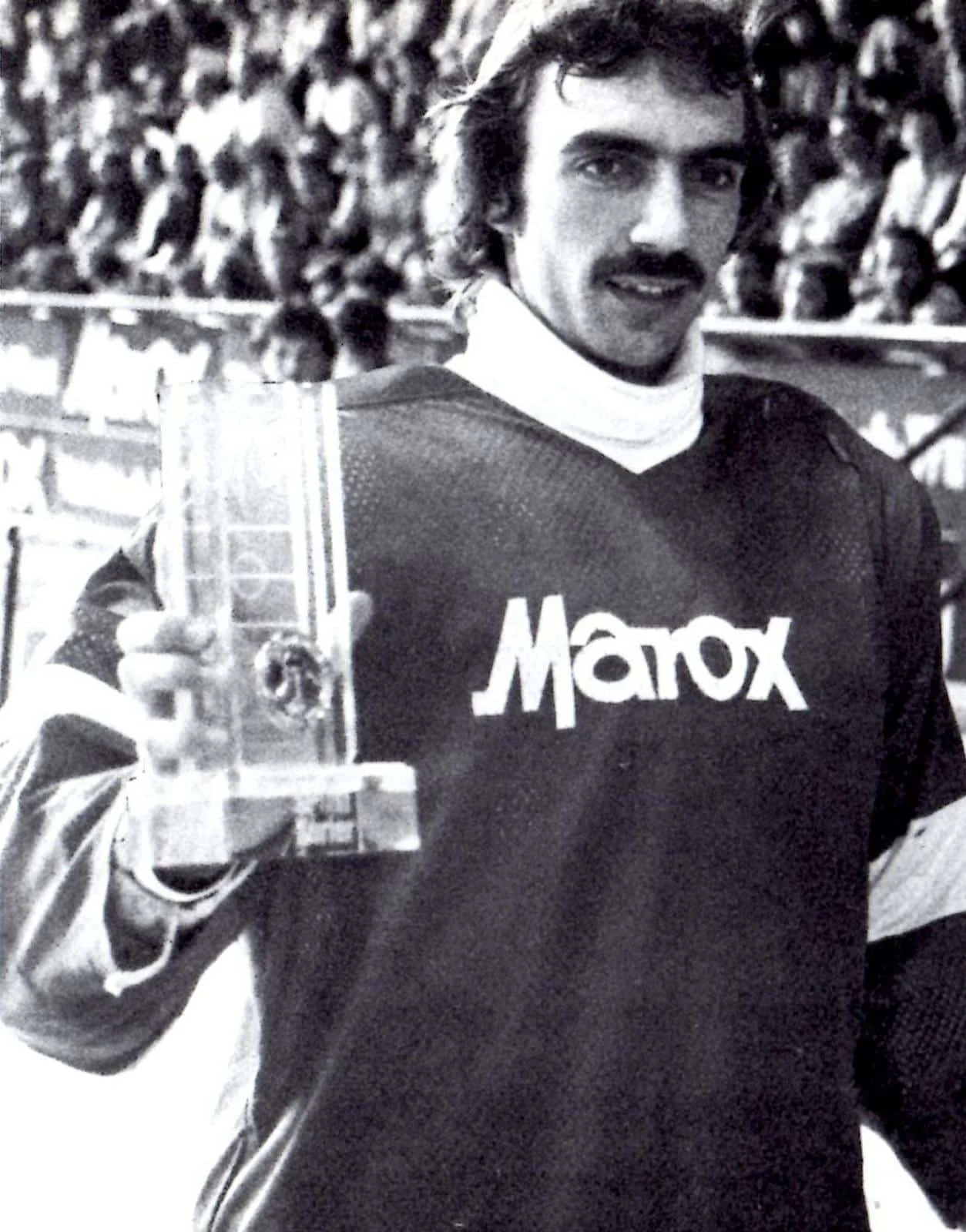
The Sportbund opens the season with 0:6 points. After seven games, they sit second-to-last with 4:10 points, and due to injury-related absences of Adlmaier, Kokoschka, and Sommer, Miro Slezak is reactivated. A 12-game unbeaten run follows, and after further ups and downs, the SBR finishes the preliminary round in 3rd place. The first opponent is Kaufbeuren. In the opening game, the line of Kretschmer-Masters-Bourbonnais-Höfner-Adlmaier scores all the goals in a 7:5 victory. The second game in Kaufbeuren is lost in sudden-death overtime. The third goes clearly to the home side. In the semifinals, Mannheim awaits — and gets revenge for the defeats of the previous season. Record champions Füssen are forced to file for bankruptcy and are relegated to the second division. Average attendance: 4,650
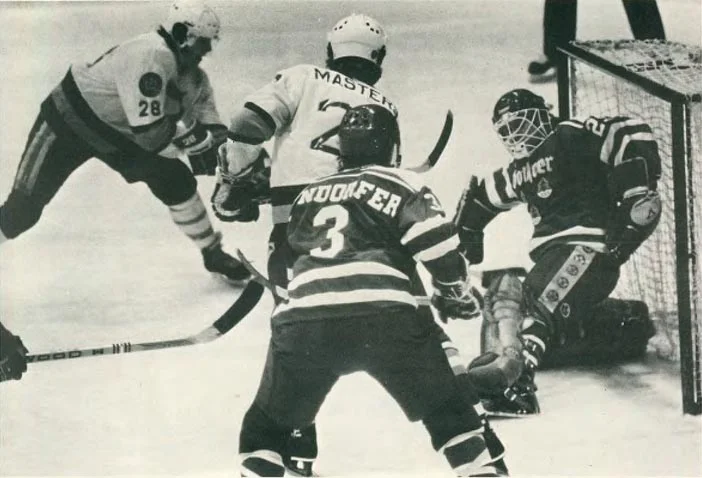
1.000 verkaufte Dauerkarten. Die Zuschauer erhoffen nach dem dritten Platz in der vorangegangenen Spielzeit einen weiteren Meistertitel. Neben Köln und Landshut zählt Rosenheim zu den Favoriten. Die Mannschaft verlassen haben Gerhard Baldauf, Paul Sommer und „Charly“ Meister. Geholt werden dafür die jungen Rainer Blum, Axel Kammerer und Georg Franz. Zum ersten Mal bei den Senioren im Einsatz ist einer der Rosenheimer Alltime-Stars: Mondi Hilger. Die Saison verläuft auch aufgrund von vielen Verletzungen anders als erwartet. Ein gebrochenes Handgelenk bedeutet sogar das Karriereende von Rick Bourbonnais, für ihn kommt während der Saison Dennis Houle. Gerhard Baldauf muß noch eimal eingreifen, beendet danach jedoch endgültig seine Spielerkarriere ebenso wie Hans Zach ohne den erhofften weiteren Meistertitel. Die Presse erwähnt zum ersten Mal den besten 3. Sturm der Bundesliga mit Ahne – Berwanger – Kammerer. Zuschauerschnitt: 4.040
2nd Championship
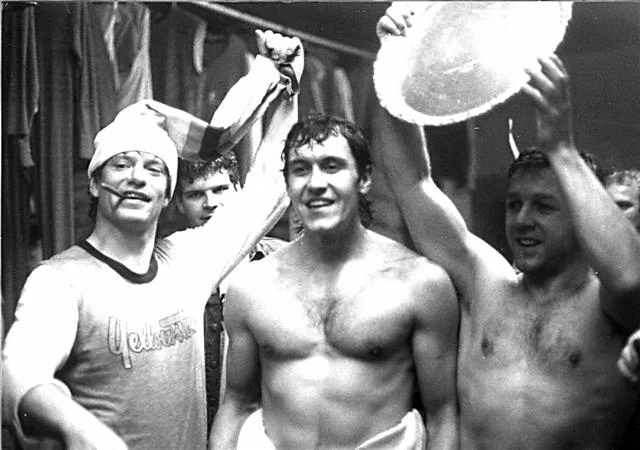
Season of the 2nd Championship. The club wants to win another championship. However, Adlmaier, Bourbonnais, Hellwig, Houle and Kokoschka have left the club, and Hans Zach is now assistant coach. In return, Ibelherr, Laycock, Mörz and Reindl are brought to the Mangfall. With Markus Berwanger, Manfred Ahne and Axel Kammerer, Rosenheim boasts the "best third line in the Bundesliga". Heinz Zerres, coach in Essen, says about the line: "They skate you off the ice — you don't stand a chance." After the preliminary round, they find themselves exactly where they wanted to be: right at the top. The first playoff opponent Iserlohn proves no major hurdle, and Kaufbeuren also fails to put up enough resistance in the semifinal — not least because Karl Friesen delivers another outstanding performance in goal. In dramatic games, Mannheimer ERC is ultimately defeated three times as well. Sportbund Rosenheim does not lose a single game in the playoffs and is crowned German Ice Hockey Champion for the second time. Average attendance: 4,700
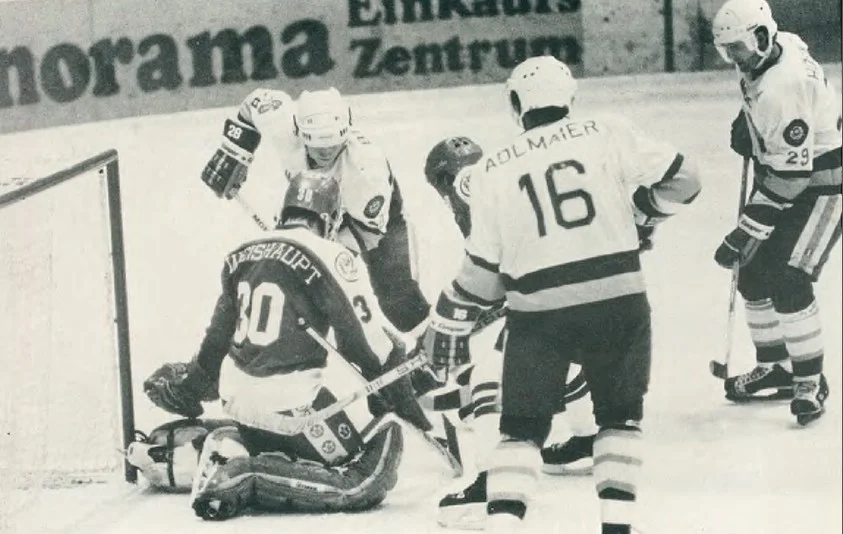
The season is not going according to plan. Injuries are once again a contributing factor to the below-par performances, and the Rosenheim fans are far from happy. Head coach Olejnik has to step down on January 30. Longtime former player Gerhard Baldauf takes over behind the bench. The team finishes 3rd in the preliminary round, but is eliminated by DEG in the semi-finals.
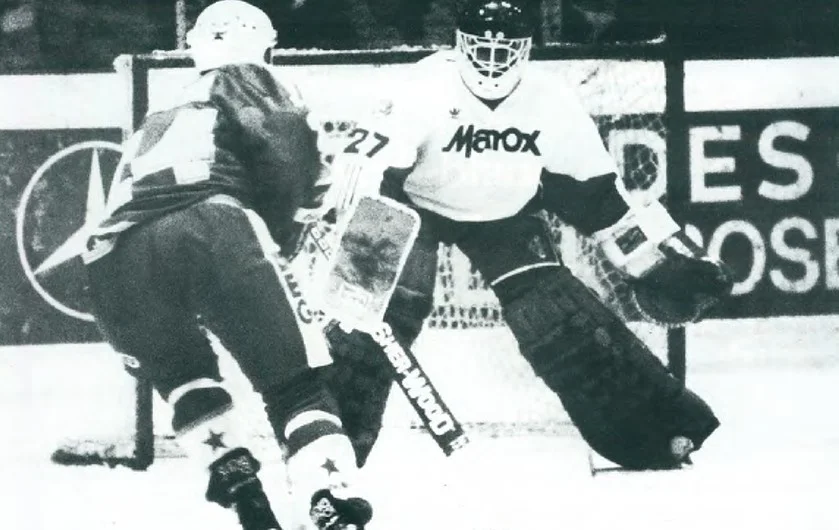
After a relatively slow start to the season, the team improves enormously following Friesen's return and finishes the preliminary round in first place. Their first playoff opponent is EV Landshut, featuring Erich Kühnhackl, who has returned to his home club. After two convincing 8–2 victories, the team advances to the semifinal against Mannheimer ERC. Coach Olejnik's squad clinches their spot in the final against Köln in just three games — a series Köln then goes on to win in three games as well. Average attendance: 4,300
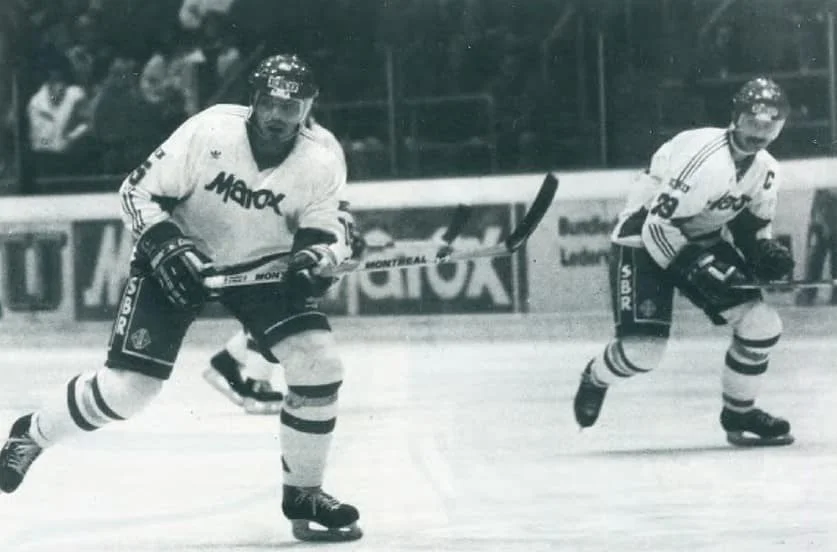
They aim for the title and are considered one of the favorites in the Bundesliga. By year's end, SBR sit top of the table ahead of Mannheim. Against quarter-final opponents Schwenningen (again featuring Roulston), they surprisingly struggle. In the semi-finals, they defeat DEG in four games — without Pouzar. After one win apiece for SBR and Köln, they take the third game at home 6–0, but fall 5–2 in Köln. Although SBR take the lead in the decisive home game through Fischer at 1–0, the squad — missing injured players Berwanger, Hilger, Kretschmer, and Pouzar — cannot hold on. Köln are champions for the third consecutive time. Average attendance: 4,970
"Bully" is born
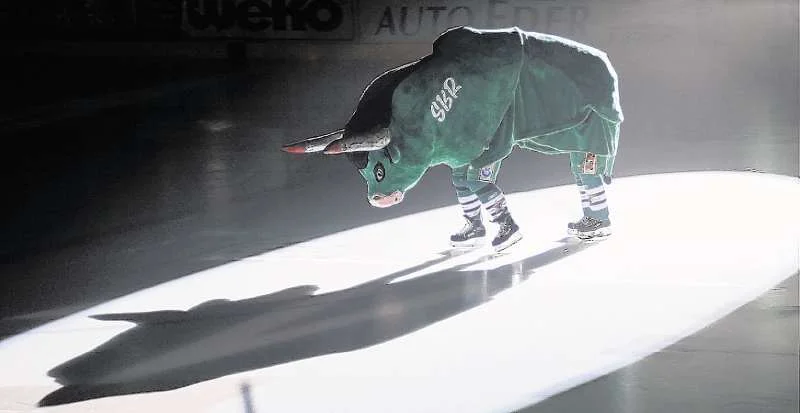
On September 1, 1989, our mascot "Bully" hit the ice for the very first time. He remains the symbol of Starbulls Rosenheim to this day, making him one of the longest-serving ice hockey mascots in the DEL.
3rd Championship
At the end of the 1987/88 season, the man who had made Rosenheim's hockey success possible passed away at the age of 62 — Josef März, president of Sportbund DJK Rosenheim. He never got to witness the third title of "his" team. The first playoff opponent is Frankfurt. In the opening game, Rosenheim already lead 4–1 after the first period. In the second game, Mondi Hilger puts the Sportbund 2–0 up with two goals, but Frankfurt level the score. Gord Sherven then delivers the winner. Taking their foot off the gas, the team loses Game 3 at home 6–4. With greater intensity, however, the Bullen bounce back in Frankfurt, winning 9–2. In the semifinals, perennial playoff rivals Mannheim are waiting. All three games are won, and the team advances to the final against the DEG. The DEG had beaten Köln, winning 7–1 there. Now they lose 7–1 to Rosenheim in the first final game. In Düsseldorf, the DEG level the series with a 4–2 win. The third final game produces a spectacle for the crowd with five minutes to go. Ahne scores what looks like the decisive 3–1 for the Sportbund. This apparently upsets Rick Amann so much that he lays into Ahne — the starting gun for an entertaining 15-minute brawl involving every player on the ice, Friesen being the sole exception. The Düsseldorf side feel hard done by referee Würth afterwards and leave the ice on the orders of their president Klüh. Either way, the points now go to the Sportbund. The deciding game in Düsseldorf is played in a very sporting spirit, with two goals each from Pouzar, Hilger, and Trattner sealing a 4–2 victory. At the championship celebration on Max-Josef-Platz, however, Mayor Dr. Stöcker makes the fateful mistake of promising to do everything in his power to keep the Sportbund at the top — and announcing that the city is planning to build a new ice arena with 11,000 seats. Average attendance: 4,600
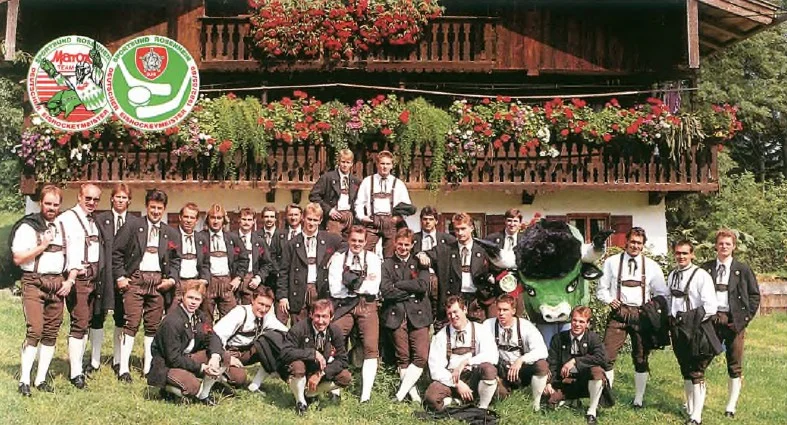
The team heads into the new season virtually unchanged and is not considered a top favourite. In the first home game against Preußen Berlin (7:3), 5,500 fans — 1,500 of whom hold season tickets — catch their first glimpse of "Bully", the Marox-Bullen mascot. The team enters the playoffs in third place. They win three games against Frankfurt and advance to the semi-finals, where they face Köln — and sweep them in three games as well. The team wins the first final in Düsseldorf, but drops the following home game. The next two games also go to the hosts, making the fifth game in Düsseldorf the decider. DEG leads 5:0 after the first period, wins 8:2, and claims the championship. Average attendance: 5,560
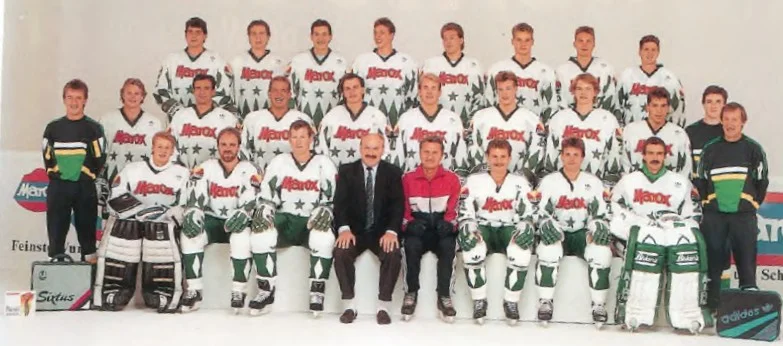
The first season featuring clubs from the newly reunified eastern states — Dynamo Berlin and Eissport Weißwasser, who at that point offer little reinforcement to the Bundesliga — unfortunately begins for the SBR once again with injuries. After the preliminary round, the Sportbund finish in third place. Once again, the first opponent is Schwenningen, and once again the team advances with more difficulty than expected. This time they meet Düsseldorf as early as the semifinal. At the Brehmstraße they win 3–2, and at home they dominate convincingly, 5–2. However, the DEG then find their footing under coach Zach and win the following three games. Sportbund Rosenheim ultimately finish third. Average attendance: 5,900
Withdrawal from the Bundesliga
In 1992, the SBR voluntarily withdrew from the Bundesliga due to disputes with the city over the construction of a new ice arena. The farewell celebration at Max-Josef-Platz had the feel of a championship party. Average attendance: 5,870
"Höfners Kindergarten" makes the impossible possible
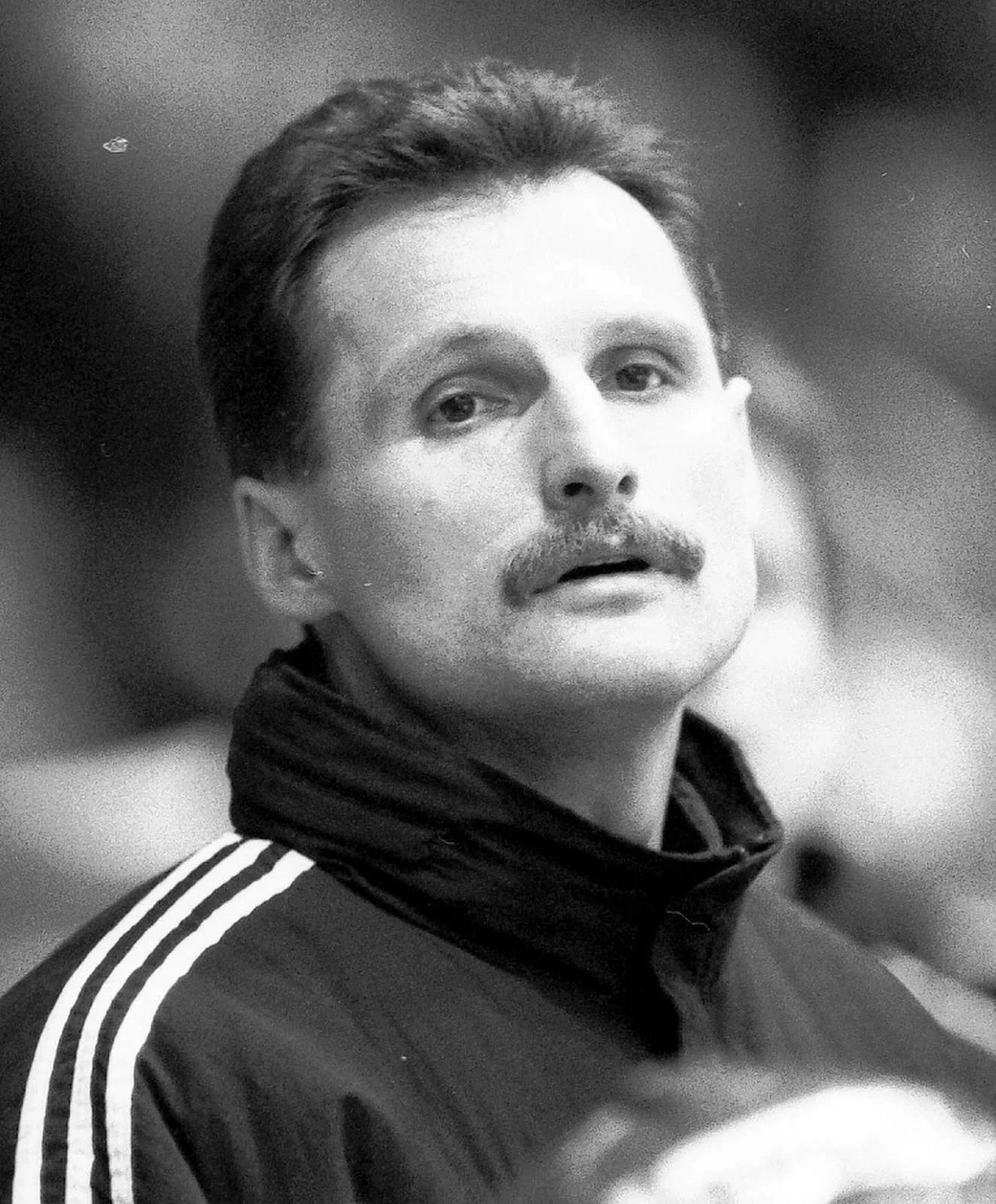
After it became clear that no new ice arena would be built in Rosenheim, the club withdrew from the Bundesliga despite having been a finalist the previous season. A "fresh start" in the Oberliga had been planned, but the club was involuntarily placed into the 2. Bundesliga by the governing body. Only a handful of players remained from the previous roster, and Ernst Höfner — who had himself still been active as team captain the year before — found himself with a very young squad of 19 players from the club's youth academy. The target for the 2. Bundesliga season was a finish somewhere between 5th and 8th place. But then something happens that truly no one had anticipated. The team — dubbed "Höfner's Kindergarten" by the press — wins immediate promotion back to the top flight! Among the fans, the attitude is "Now more than ever," and driven by that spirit as well as the unexpectedly strong performances, an average of 5,100 spectators attend home games in the Bundesliga II.
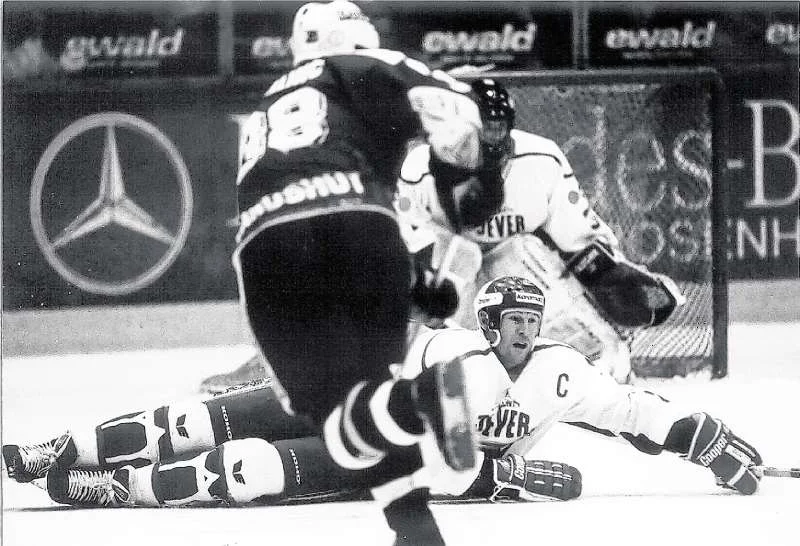
After the more than surprising promotion back to the Bundesliga under head coach Ernst Höfner, the primary goal is clear: stay in the league. That objective is to be achieved with budget-friendly players and a strong contingent of young talent. Ernst Höfner needs only a few leaders in the team — but plenty of hard-working role players ready to give their all. On the championship-winning roster of EC Hedos München this season, there are 8 players who once laced up their skates for Rosenheim: Mondi Hilger, Georg Franz, Gord Sherven, Dale Derkatch, Rainer Lutz, Anthony Vogel and Sergei Schendelew. Dieter Hegen, also on the squad, would not join the Starbulls until later. Average attendance: 5,000
1994 – 2000
With the founding of the DEL on the North American model, the "Sportbund" Bulls become the Star Bulls Rosenheim. Six years in the pro league, a city turned upside down by Jim Hiller's winning goal — and in the end, a bitter withdrawal.
Gründung der DEL

Following the North American model, the Deutsche Eishockey Liga is founded in 1994. The franchise holders from Rosenheim rename themselves Star Bulls Rosenheim, preserving the "SBR" abbreviation.

The Bundesliga becomes the DEL with 18 clubs, the Sportbund Rosenheim becomes the Star Bulls Rosenheim, the abbreviation SBR is retained, and the name Bulls fits perfectly with the meat processing business of the main sponsor. Many other clubs also rename themselves with the introduction of the Deutsche Eishockeyliga, following the North American model. In the DEL, budgets of at least 4 million DM are mandatory. The Star Bulls' budget this year stands at 6 million DM, with advertising revenue of 2.5 million DM and projected attendance of 5,000 fans. Actual average attendance turns out to be 3,866. The Mad Dogs München withdraw during the season, leaving only 17 clubs in the standings. Average attendance: 3,866
Kathrein New Sponsor
A new sponsor stepped in — the company Kathrein — making the stadium renovation possible. Rosenheim ice hockey was back, and so was seated spectator sport. As a result, the Marox-Stadion was also renamed the Kathrein-Stadion.
Future Starbulls head coach Ron Chyzowski makes a brief appearance in Rosenheim. He features in two games, registers an assist on the scoresheet, and spends 2 minutes in the penalty box. Average attendance: 3,974
"Hiller, Hiller — Landshut Killer"
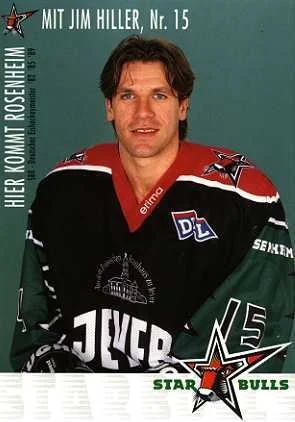
The goal of the year is scored – according to the Eishockey-Magazin – on Friday, 3 January, at the Rosenheim stadium. In overtime of the Rosenheim – Landshut game, SBR Canadian Jim Hiller hammers the puck into the net for the 3–2 winner. The city goes wild, as for a few weeks the new Bavarian ice hockey hierarchy is set in stone: Rosenheim finish sixth and advance to the championship round and playoffs, while EV Landshut must take the long road through the relegation round. By the end of the season, however, the club is facing possible withdrawal from the top flight due to uncertainties surrounding the 4.7 million budget for the coming season. The Star Bulls are not participating in DEL operations as a GmbH, and the club leadership at the Sportbund is concerned that the TV revenues from the Kirch contract may not flow as agreed. The parent club would then be left to foot the bill for any shortfalls in the ice hockey operation.
I've been waiting for a season like this ever since I started following Rosenheim ice hockey regularly back in 1970. The ultimate DEL season in the history of Rosenheim ice hockey. The crowning moment in top-level hockey: We proudly present: „THE BIGGEST TEAM WE EVER HAD!" Coach Gary Clark spared no expense or effort to, as he puts it, haul "the best team ever to set foot on Rosenheim ice" into our beautiful stadium. Even though the März era with Marox is already over, the Canadians and/or Americans are quite obviously being signed at current meat-market prices. This is the worst team ever to be let loose on the ice in Rosenheim — and that's no fault of the few Germans involved. The season is therefore going spectacularly off the rails. To the extent possible, these "players" will be sold off or loaned out somewhere as quickly as possible during the season, and usable players from last year's squad will be brought back. Average attendance: 2,095
Only 7 players are retained from the previous disastrous season. The games are significantly better than the year before, but the stated goal — reaching the playoff round — is not achieved. At times, up to 7 regular players are sidelined with injuries, and the small roster cannot adequately compensate for their absence. Furthermore, according to head coach Brunner, the team lacks aggression, and as a result he is none too pleased about receiving the award for the league's most fair-play team at the end of the season. Nevertheless, attendance is up again by 30 percent, with an average of 2,692 fans per game. Average attendance: 2,692
The last season in the top tier of German ice hockey
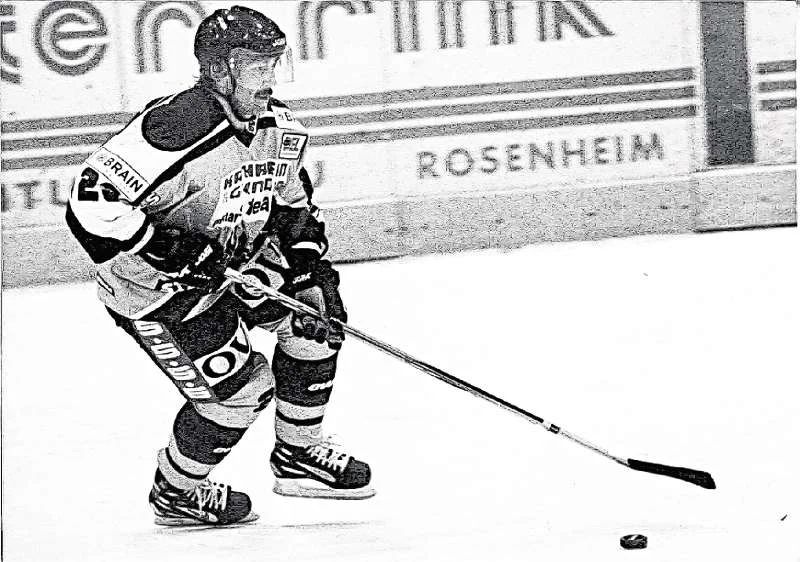
Second, but this time permanent relegation from Germany's top league, the DEL. Main sponsor Kathrein withdraws and sells the DEL license to Iserlohn. Foundation of Starbulls Rosenheim EV and a fresh start in the lowest division, the Bezirksliga.
2000 – 2025
From the Bezirksliga back to the DEL2 — step by step, promotion by promotion. Cup victory, runner-up finish, new arena: modern-day Rosenheim is redefining itself.
Refoundation - Starbulls Rosenheim e.V.

On May 23, 2000, a new club was founded with the decisive involvement of Mondi Hilger, securing the future of ice hockey in Rosenheim.
Promotion to the Landesliga
After the sale of the DEL licence, the restart comes at the very bottom. The primary goal of the founders of Starbulls Rosenheim e.V. is to preserve Rosenheim ice hockey, which has helped put the city on the map across Germany — and above all to safeguard its outstanding youth development work. And so a remarkable gathering of names from Rosenheim's former Bundesliga and DEL days comes together: ex-internationals and multiple German champions — no longer in their prime, admittedly — to take on out-of-their-depth amateur players and help put Rosenheim ice hockey back on its feet. You won't often come across a lineup like this in the lowest division. Among those playing are Anton Maidl, Jürgen Lechl, Rainer Lutz, "Wacki" Kretschmer, and one of the driving forces behind the initiative, Mondi Hilger — who at that point is still active in the DEL with the München Barons. Further players from Rosenheim's Bundesliga era include Walter Deisenberger and Vitus Mitterfellner, who spent a long time playing in Munich and goes on to become a firm fan favourite. But it isn't just the team that is record-breaking in this league. The opening faceoff of the first home game of the season against Berchtesgaden is delayed by 20 minutes, because queues of fans are still waiting at the ticket booths when the scheduled start time arrives. The pre-printed tickets nearly run out — nobody had anticipated 3,000 !!! spectators. Even the Eishockey-Magazin covers the event in its 12/2000 issue on page 4: "3,000 fans celebrate their Starbulls Starbulls Rosenheim remain at the top — at least when it comes to fan support. 3,000 fans celebrated their favourites' home debut in the Bezirksliga, the lowest tier of the Bavarian State Sports Association, and turned the match against Berchtesgaden into a real festival. Mondi Hilger & Co. provided the entertainment on the ice, toying with their opponents and scoring at almost a goal a minute in a 22:0 (7:0, 7:0, 8:0) victory. That the visitors would be heading home without a goal was clear from the outset — but managing only five shots on goal was a little disappointing, to say the least." The goals for the Starbulls in this memorable match were scored by: Mitterfellner 5, Hilger 4, Lechl 3, Kluge 2, Maidl, Rohner, Deisenberger, Brandstätter, Rohm, Sasjadvolk, Schädler and Schurzmann. Equally rare, in all likelihood, are friendly matches between DEL and Bezirksliga clubs — such as the game played in Rosenheim in February 2001: Starbulls Rosenheim vs. Düsseldorfer EG. An average attendance of 1,623 hockey fans is also nothing to scoff at for the Bezirksliga.
Promotion to the Bayernliga
As expected, EV Landsberg and the Starbulls earn promotion to the Bayernliga. In the head-to-head matchup between the two teams, EV Landsberg has the edge — just as they did in last season's final. Average attendance: 1,234
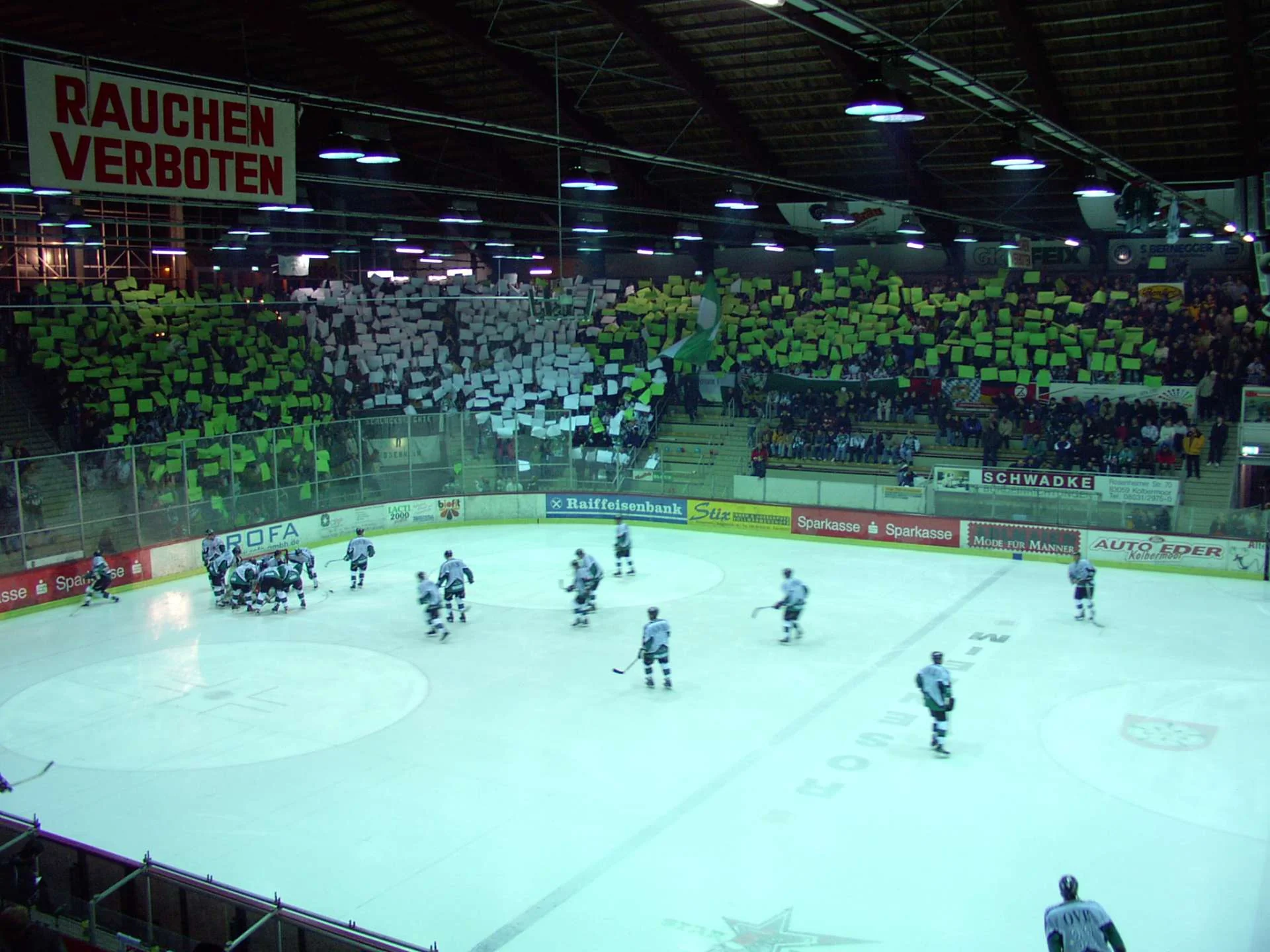
After the Starbulls' run through the Bezirksliga, fans are once again expecting an immediate promotion to the Oberliga this season. Michael Pohl, Beppi Eckmair and Andi Schneider have already played for Sportbund, and with Stanislaw Meciar, the first foreign player since the fresh start in 2000 arrives at the Mangfall — though without making a decisive impact. That said, there had arguably never been a Bayernliga season with such strong teams. The strongest sides alongside the Starbulls are EV Landsberg 2000 and EHC München. EHC München ultimately defeat the Starbulls in the semi-finals and, after winning the final against Landsberg, earn promotion to the Oberliga. Average attendance: 1,603
Promotion to the Oberliga
On their second attempt, the Starbulls secure promotion to the Oberliga this season. From 2004/05, Rosenheim is back under the umbrella of the DEB. Their strong rivals of recent years, EV Landsberg, this time lose the playoff duel. Returning players Häusler, Thomas Schädler, and Schiffl strengthen the squad, and with Jeff Boettger — brought over from Canada mid-season — only one import player takes to the ice. Average attendance: 1,752
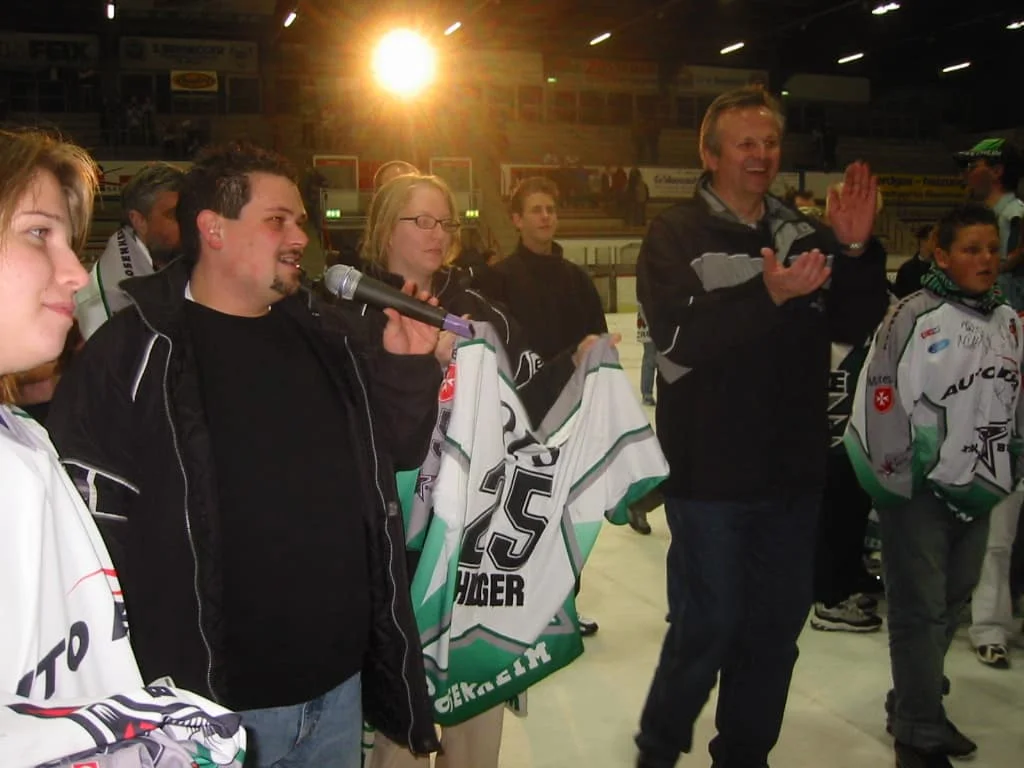
Da die Rosenheimer Eishockeymannschaft nun wieder im Bereich des DEB ist haben sie das Ziel die Meisterrunde zu erreichen, doch der Sprung von der Bayern- in die Oberliga ist doch größer als von vielen Zuschauern gedacht. Das Spiel ist wesentlich körperbetonter und schneller. Doch schaffte es der Sportbund Rosenheim zum Schluss in die Aufstiegs-Play-Offs und spielte dort im Finale gegen EHC München vor 4000 Zuschauern. Das best of five gewannen die Münchener in 3 Spielen und waren somit klarer Aufsteiger.
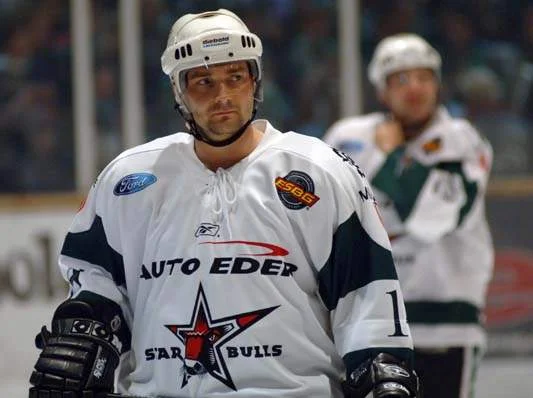
As is unfortunately often the case in ice hockey, the format of the Oberliga season was once again shaped not by the participating clubs, but by those who could no longer compete due to financial difficulties. As a result, the Starbulls had a very tough time proving themselves and were eliminated in the quarter-finals of the playoff phase by EV Landsberg, finishing 8th in the standings.
Operation "Alt-Rosenheim" fails — it's all downhill in the Oberliga
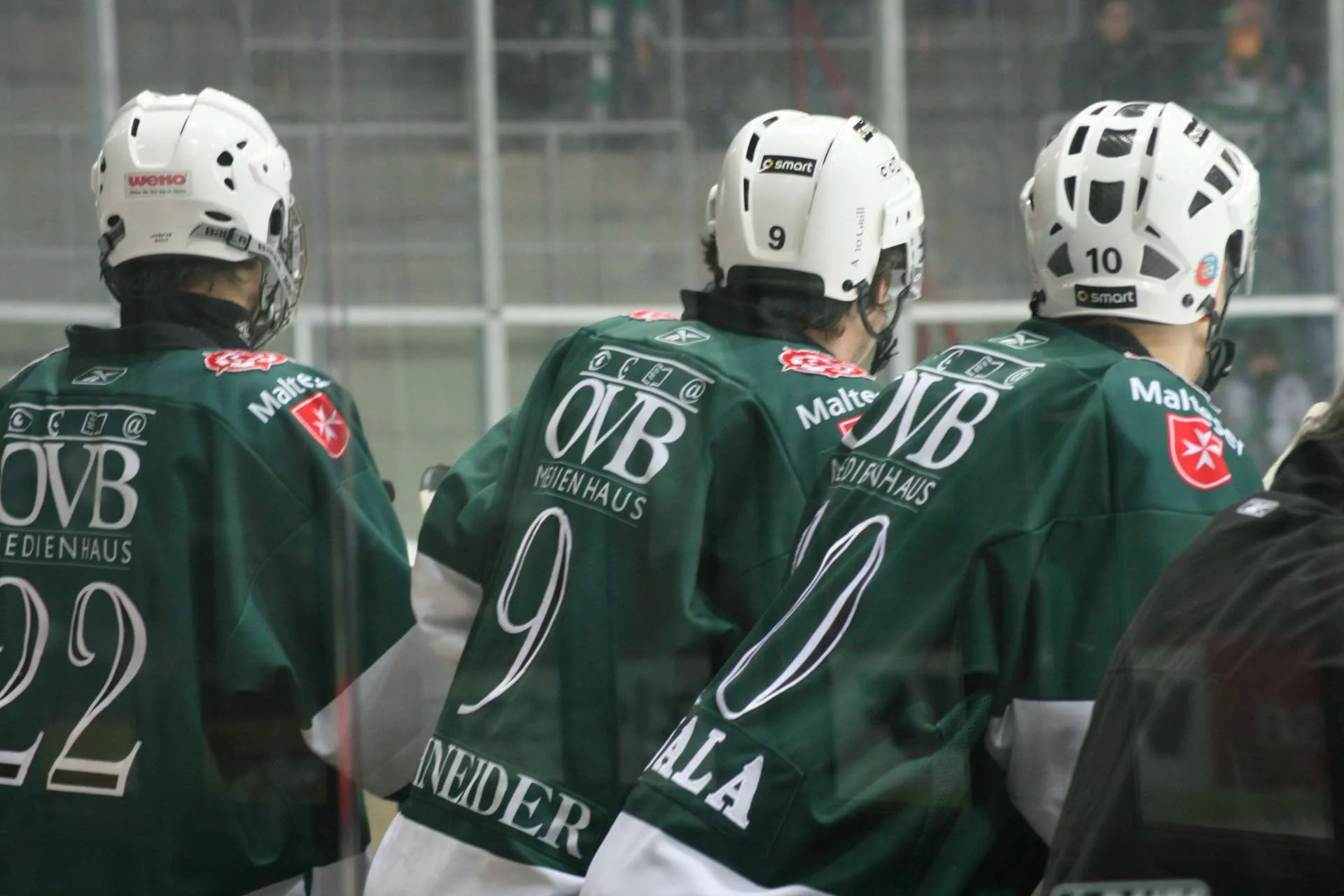
The teams from Hannover, Heilbronn, and Ravensburg enter the 2006/07 season as favourites for promotion, boasting the biggest budgets and arguably the strongest rosters. Following a three-year plan drawn up after promotion from the Bayernliga, the Starbulls had set their sights on challenging at the top in their third Oberliga season. They made a surprise impression in year one — but the current season has seen them sink to the bottom, in every sense of the word. Rosenheim finished no higher than 11th place this season.
Second Team (Oansbee)
In 2008, Starbulls Rosenheim entered a second team into the Bezirksliga for the first time.
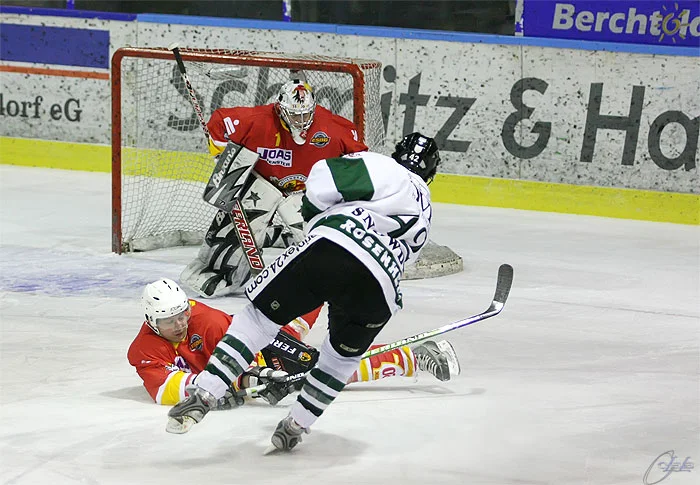
After a disappointing previous season that ended with 11th place in the preliminary round, the Starbulls roster is getting a new look. The Starbulls managed to clinch the Play-Downs (best of seven) in Game 7 against Passau Black Hawks with a 5–0 victory, narrowly avoiding relegation.
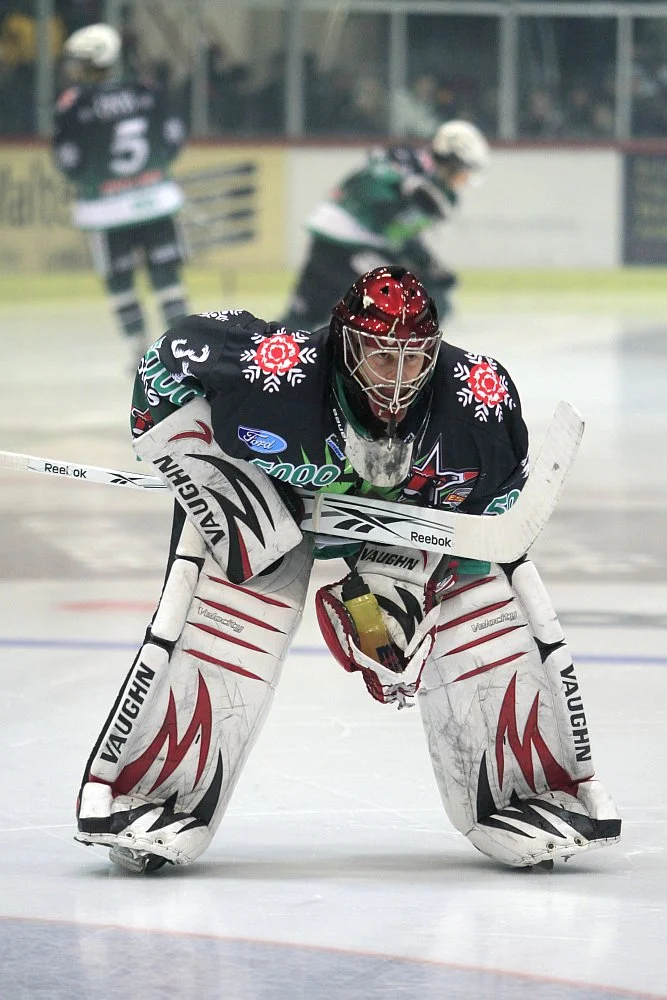
The Starbulls Rosenheim had promotion firmly in their sights this season. The goal remained within reach until the very last game, but in the playoffs against ESV Kaufbeuren, Kaufbeuren sealed promotion in Game 4 of the best-of-five series with a 5–3 win over the Starbulls Rosenheim — leaving Rosenheim in 2nd place, narrowly missing out on their target.
Rosenheim Talents
For their first five Oberliga seasons, Starbulls Rosenheim relied exclusively on Rosenheim-based players — young talents coming up from the DNL squad alongside veteran returnees from other, often higher-division clubs. Either way, a number of other experienced players were ultimately willing to pull on the jersey for the newly founded Starbulls Rosenheim e.V. and help get the new club off the ground.
Promotion to the 2nd Bundesliga
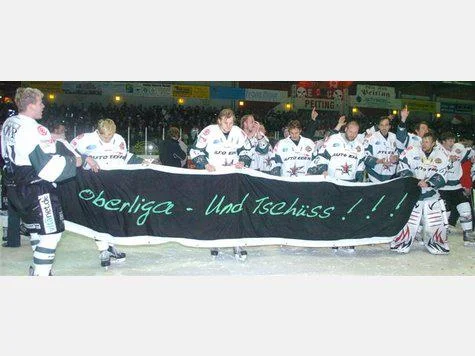
After a very mixed season and six years in the Oberliga, the Starbulls really turned it on in the 2009/2010 playoffs, claiming victory in the final against EC Peiting and securing promotion to the 2. Bundesliga. Ice hockey in Rosenheim has now definitively returned to the national level of German ice hockey.
First Cup Victory in the DEB Cup
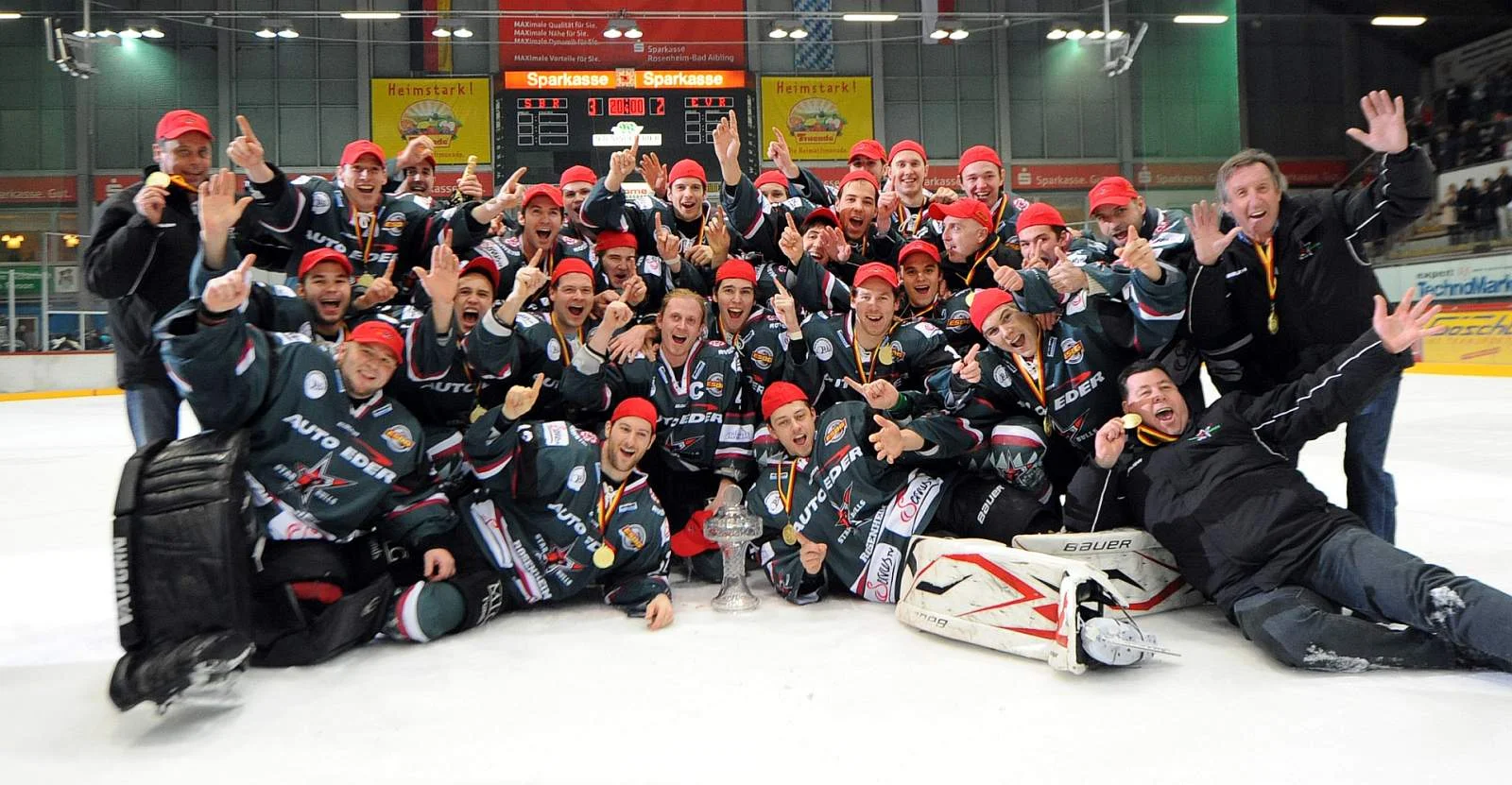
The Rosenheimers edged out Ravensburg Towerstars 3:2 in the DEB Cup Final, bringing the first cup title back to Rosenheim. In the regular season, however, the Rosenheimers were eliminated in the playoff semifinals by Ravensburg Towerstars, suffering a 4:1 defeat.
Vice champions of the 2nd Bundesliga
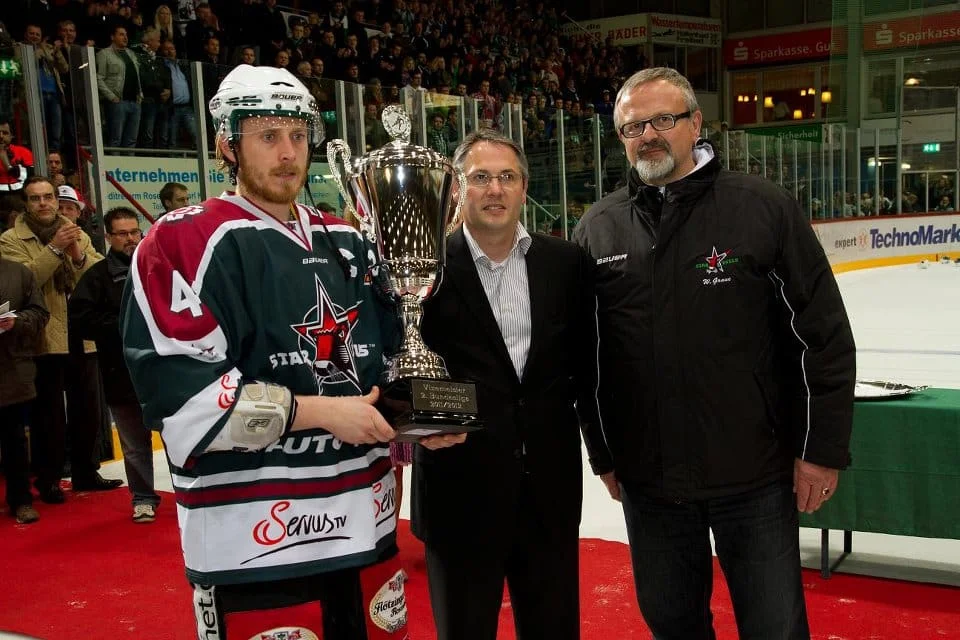
Already in their second year in the 2nd Ice Hockey Bundesliga, the squad led by coach Franz Steer fought their way to the finals with tremendous determination and passion. In a dream final against the Landshut Cannibals, the Starbulls were ultimately defeated. Nevertheless, they were celebrated by the fans like champions.
Founding of DEL2

On September 13, 2013, the Starbulls Rosenheim kicked off the 1st season of the new, independent league — the DEL2 — alongside 11 other teams.
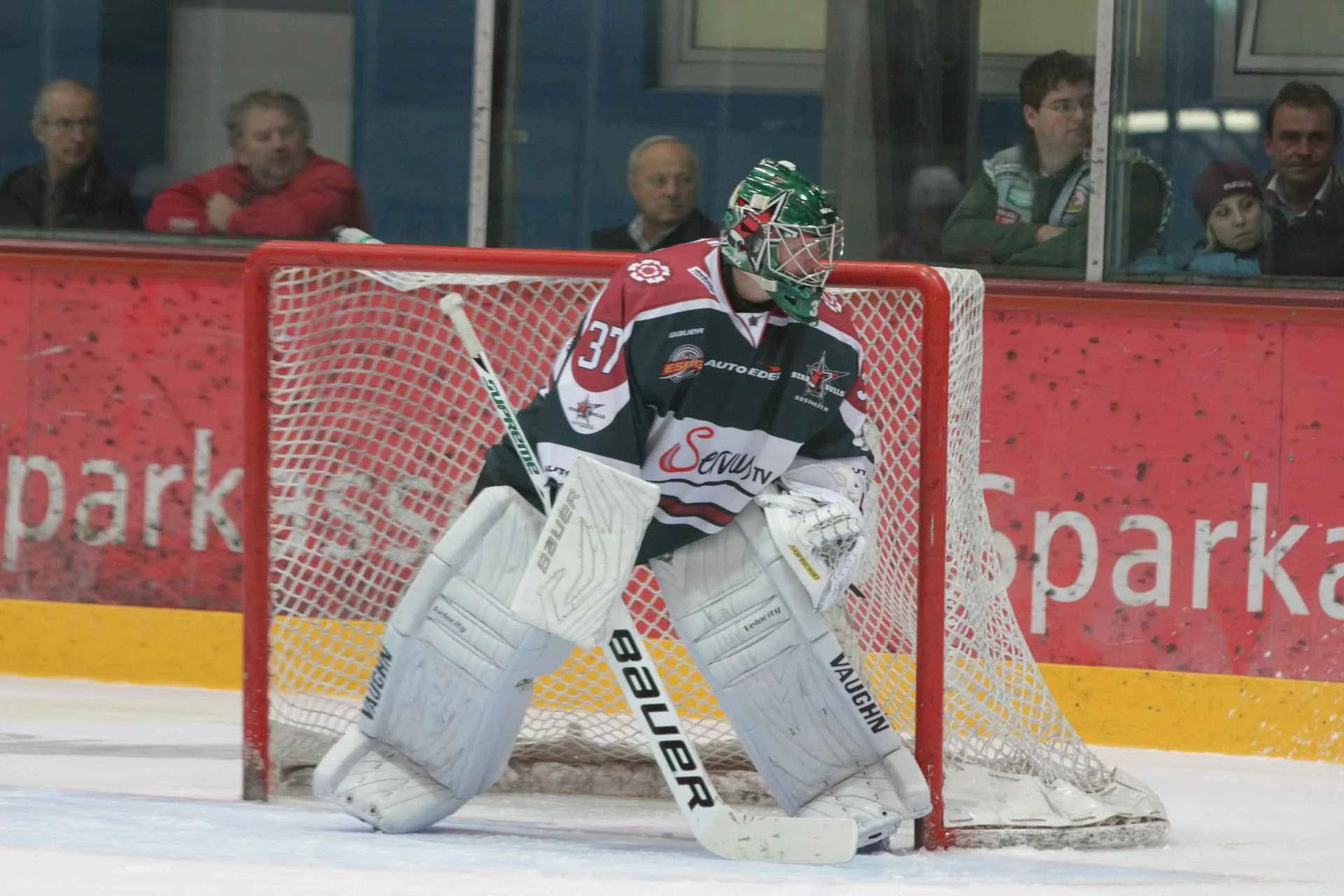
The Starbulls Rosenheim comfortably reached the playoffs in the 2012/13 season, where they defeated arch-rivals in the quarterfinals 4–2 to advance to the semifinals. However, the run came to an end against the Bietigheim Steelers in the semifinals, and the Starbulls Rosenheim ultimately finished in 4th place.
Renovation of the Bully Mascot
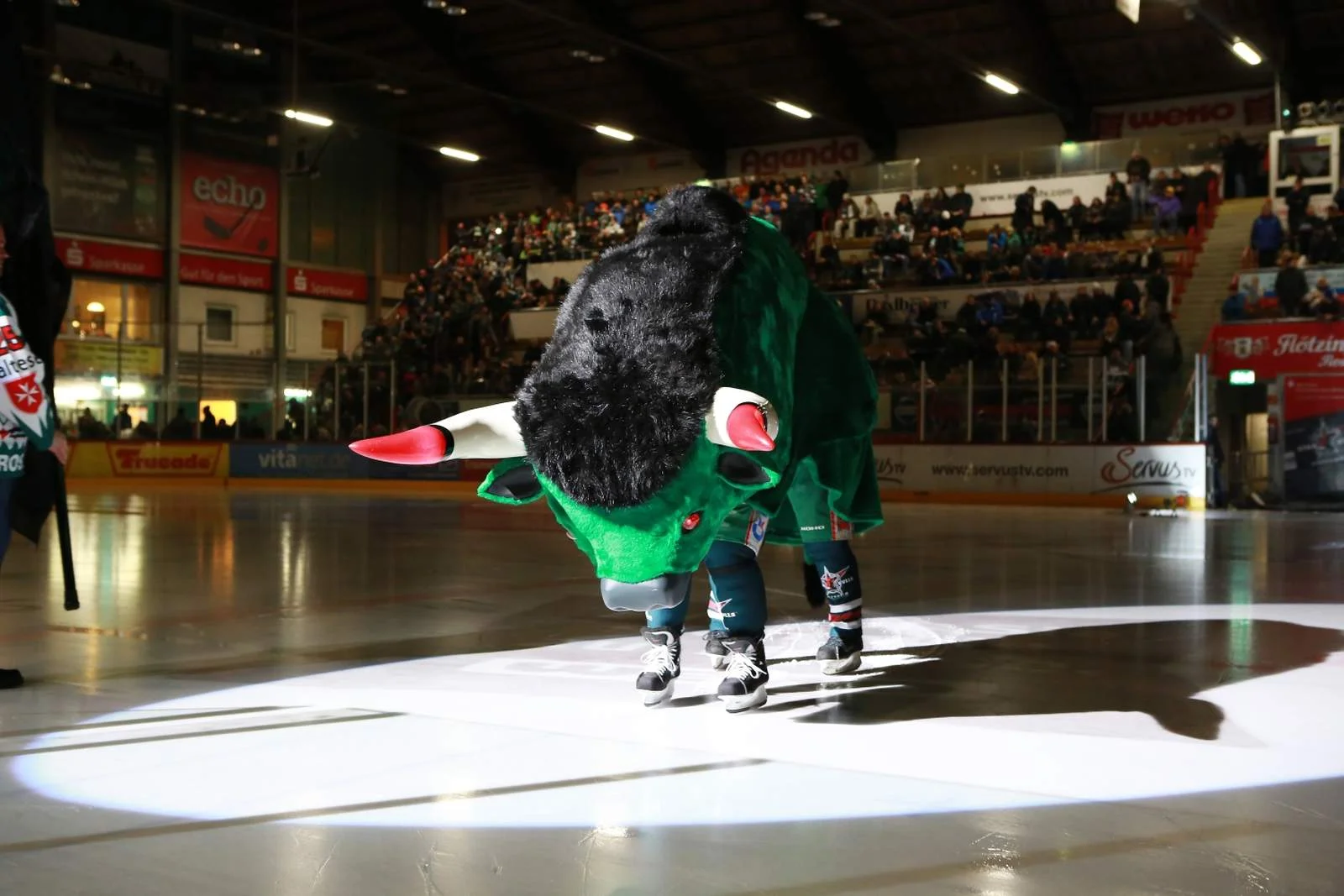
Since our Bully had gotten on in years and time had left its mark on him, he was completely gutted and rebuilt from scratch by the Starbulls officials in 2014. New since then: glowing eyes and horns.
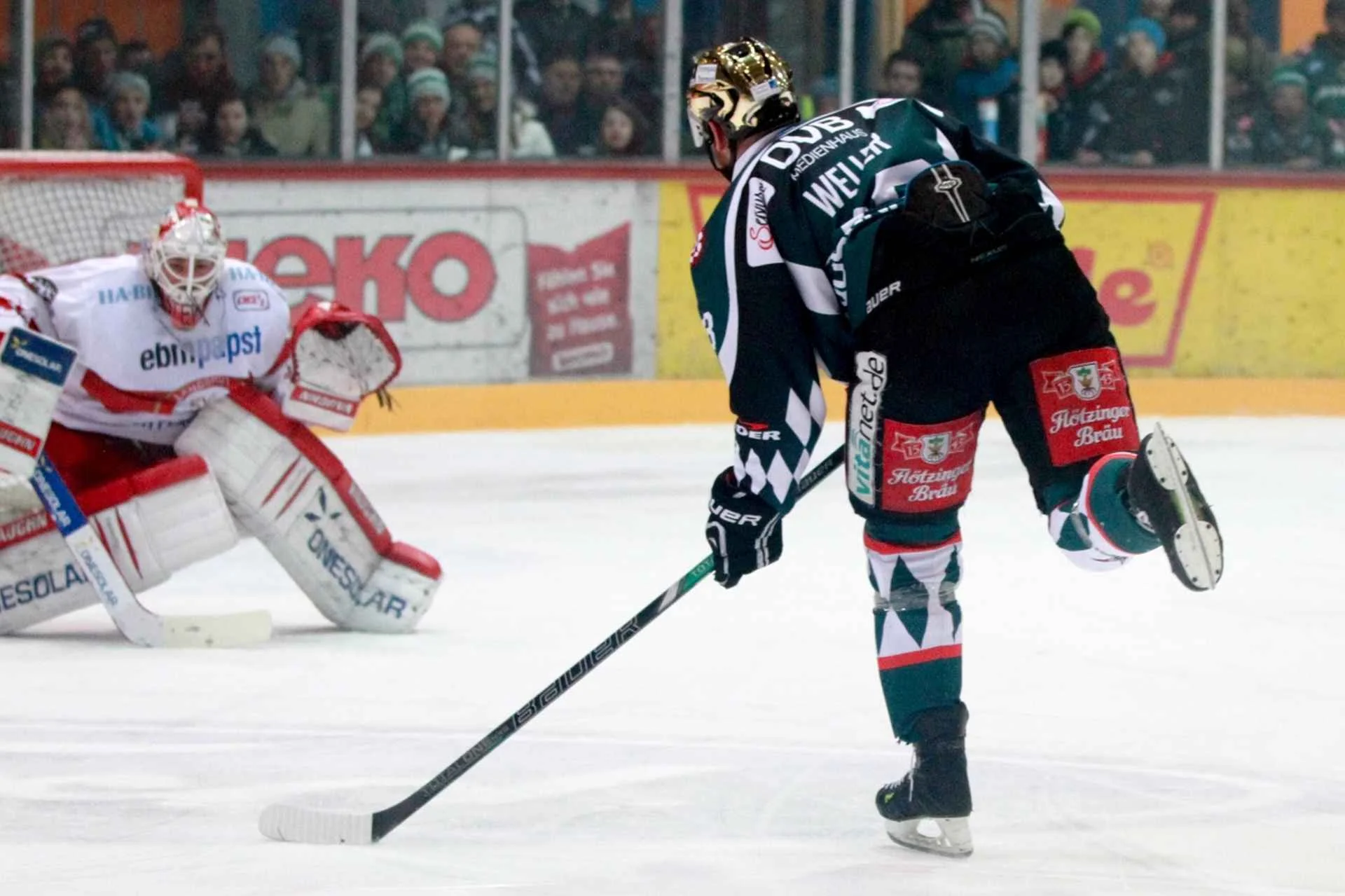
The 2013/2014 season went very well for the Starbulls Rosenheim, as they finished 2nd in the standings. In the playoffs, however, they were eliminated in the semifinals by the Bietigheim Steelers, suffering a 4–2 series defeat.
An era comes to an end
In 2014, it was announced that the current board of directors would be stepping down. Having guided the club — re-founded in 2000 — back to the top of German ice hockey, Wilhelm Graue, Karl Aicher and Richard Diebald stepped aside to focus on their private lives.
New Board of Directors
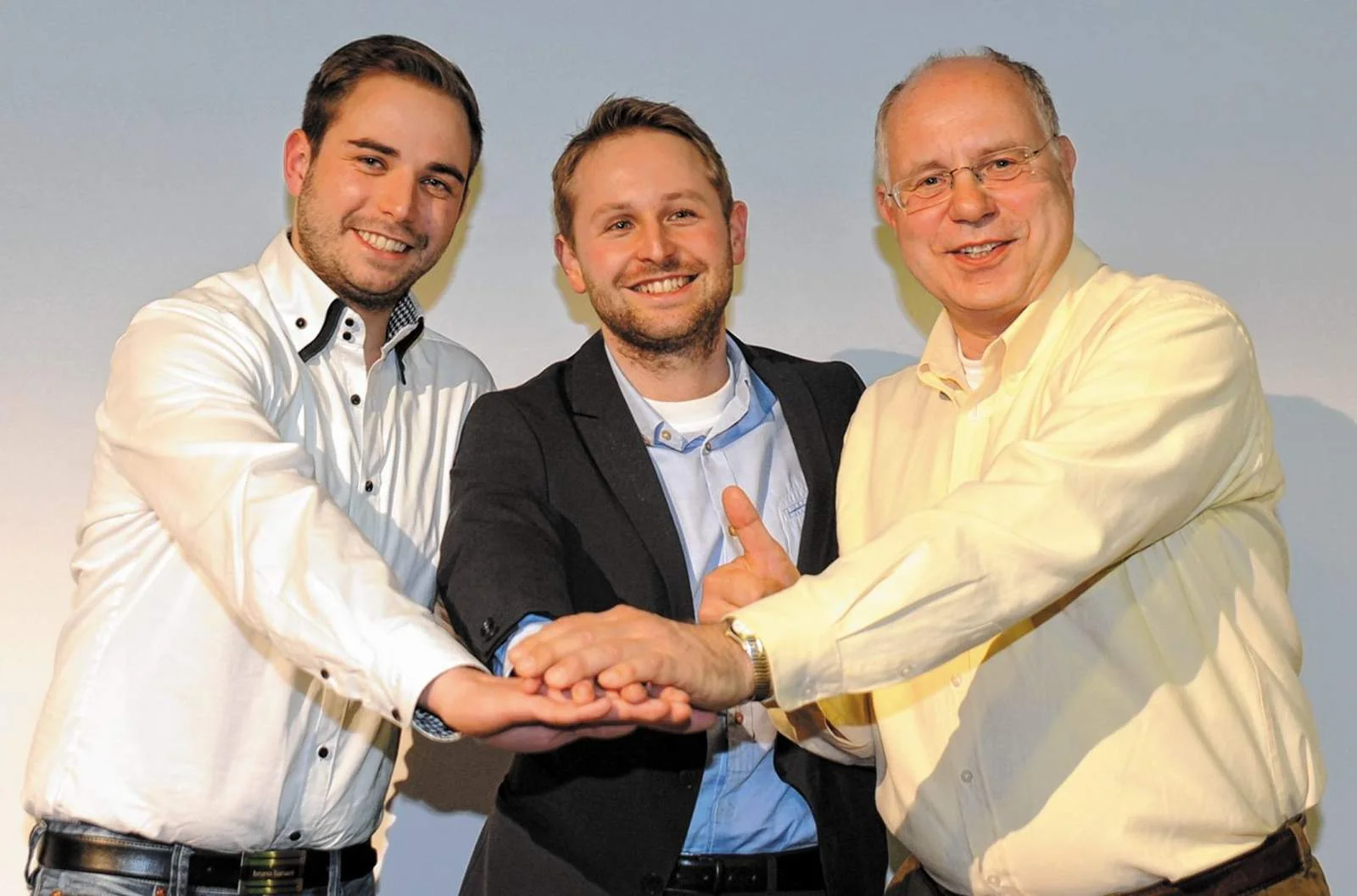
In 2014, a new board was elected for Starbulls Rosenheim. 167 club members accepted the invitation to the extraordinary general assembly at the OVB-Druckzentrum in Aisingerwies. The vote went unanimously and without a hitch. With this, the new board succeeds Wilhelm Graue, Karl Aicher and Richard Diebald after nearly 15 years of service. The new board is made up of: Jost Fischer (1st Chairman) Peter Dürr (2nd Chairman) Marcus Thaller (3rd Chairman)
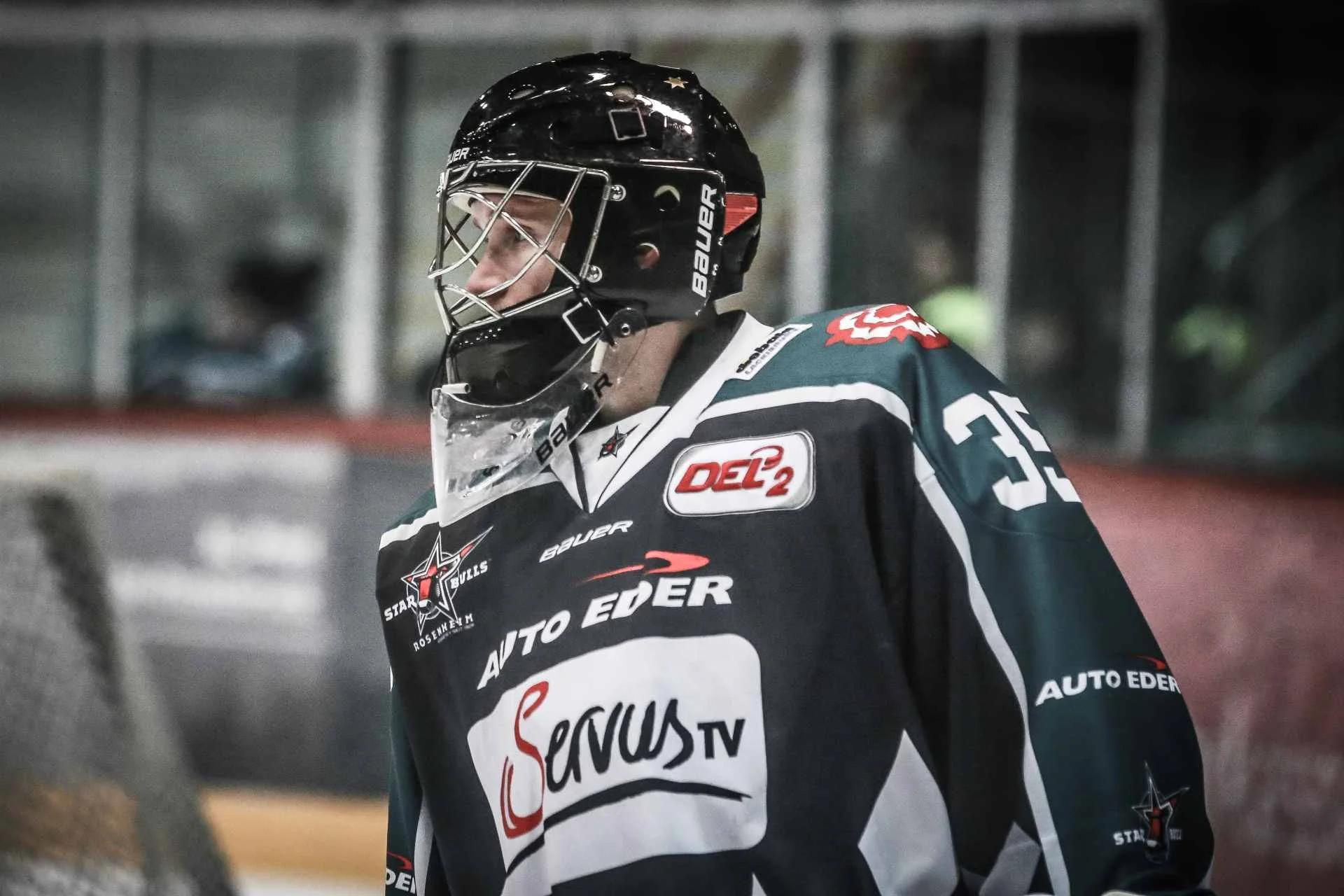
The Starbulls Rosenheim endured a very mixed 2014/15 season, falling at the playoff quarterfinal stage and finishing in 8th place.
New Main Sponsor
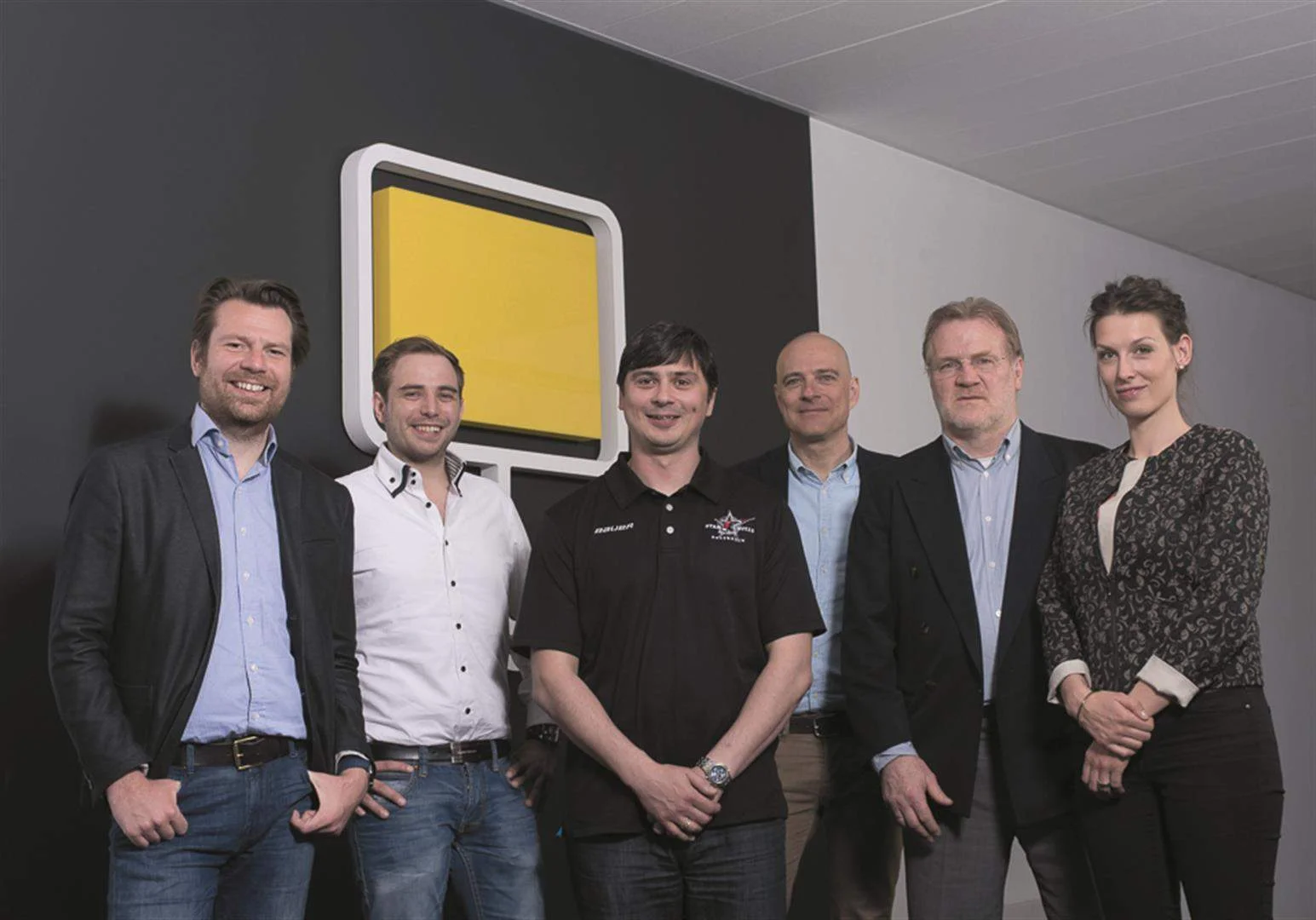
The Starbulls from Rosenheim present their new main sponsor in 2015. Meinestadt.de can be seen on the Starbulls' jerseys starting this year.
New Stadium Name – emilo-Stadion
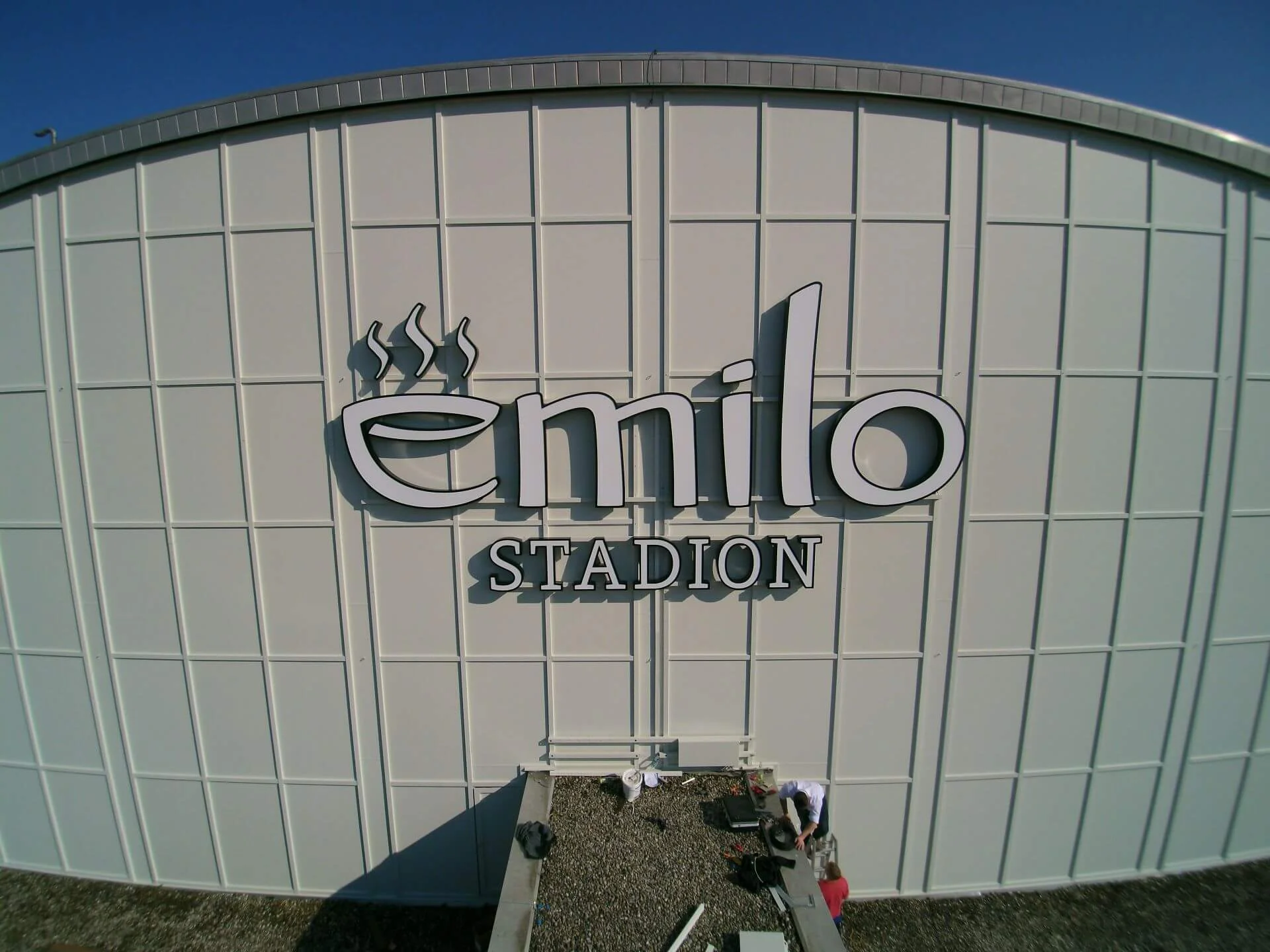
The ice rink on Jahnstraße has carried many names over the decades: following the addition of a roof in 1973, it was first known as the Frucade-Stadion during the EV Rosenheim era. In the 1980s, the Starbulls skaters celebrated their greatest successes under the name Marox-Stadion, claiming the German championship three times. From the 1990s onwards, the arena was then known as the Kathrein-Stadion. On 31 December 2015, the naming rights contract expired and was not renewed, leaving the City of Rosenheim and the Starbulls in search of a new naming partner. As the Oberbayerisches Volksblatt reported on Tuesday, negotiations with Munich-based coffee roaster Emilo — a company that had already been running extensive advertising inside the stadium — have now been concluded. By mid-April the time had come: the new lettering was installed, and the stadium has been known as the emilo-Stadion ever since.
BOARD OF DIRECTORS RESTRUCTURED
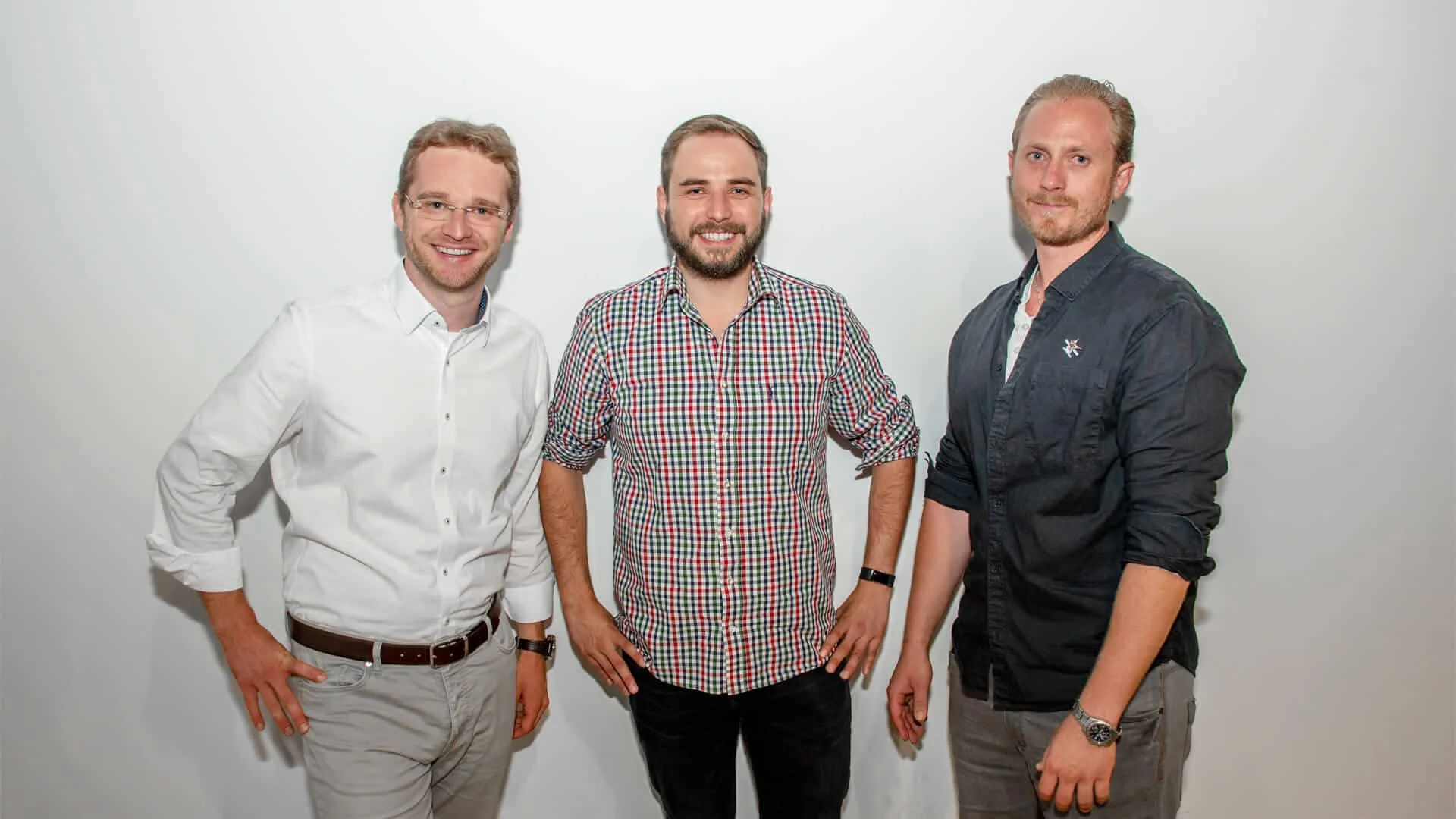
In August 2016, the Starbulls' board of directors was restructured at a general membership meeting. After the then-chairman Jost Fischer stepped down at his own request, new leaders had to be found to guide the future of the traditional club from the Mangfall. The trio led by new chairman Hans-Peter Schwarzfischer, managing director of an online specialist retailer, was elected at the membership meeting at the OVB-Medienforum without a single vote against. The new board consists of: Hans-Peter Schwarzfischer (Chairman) Stephan Gottwald (Vice-Chairman) Marcus Thaller (Second Vice-Chairman)